Plantas
1. Alford, M.H. (21 de septiembre de 2020). Mayna suaveolens (Triana & H.Karst.) Warb. En Bernal, R., S.R. Gradstein & M. Celis (Eds.). (2015). Catálogo de plantas y líquenes de Colombia. Instituto de Ciencias Naturales, Universidad Nacional de Colombia, Bogotá. http://catalogoplantasdecolombia.unal.edu.co
2. Alford, M.H. (22 de septiembre de 2020). Lunania parviflora Benth. En Bernal, R., S.R. Gradstein & M. Celis (Eds.). (2015). Catálogo de plantas y líquenes de Colombia. Instituto de Ciencias Naturales, Universidad Nacional de Colombia, Bogotá. http://catalogoplantasdecolombia.unal.edu.co
3. Alford, M.H. (22 de septiembre de 2020). Ryania speciosa Vahl En Bernal, R., S.R. Gradstein & M. Celis (Eds.). (2015). Catálogo de plantas y líquenes de Colombia. Instituto de Ciencias Naturales, Universidad Nacional de Colombia, Bogotá. http://catalogoplantasdecolombia.unal.edu.co
4. Alford, M.H. (22 de septiembre de 2020). Tetrathylacium johansenii Standl. En Bernal, R., S.R. Gradstein & M. Celis (Eds.). (2015). Catálogo de plantas y líquenes de Colombia. Instituto de Ciencias Naturales, Universidad Nacional de Colombia, Bogotá. http://catalogoplantasdecolombia.unal.edu.co
5. Almeda, F., H. Mendoza-Cifuentes, D.S. Penneys , F.A. Michelangeli & M. Alvear (23 de septiembre de 2020). Bellucia pentamera Naudin En Bernal, R., S.R. Gradstein & M. Celis (Eds.). (2015). Catálogo de plantas y líquenes de Colombia. Instituto de Ciencias Naturales, Universidad Nacional de Colombia, Bogotá. http://catalogoplantasdecolombia.unal.edu.co
6. Almeda, F., H. Mendoza-Cifuentes, D.S. Penneys , F.A. Michelangeli & M. Alvear (23 de septiembre de 2020). Henriettea fissanthera (Gleason) Penneys et al. En Bernal, R., S.R. Gradstein & M. Celis (Eds.). (2015). Catálogo de plantas y líquenes de Colombia. Instituto de Ciencias Naturales, Universidad Nacional de Colombia, Bogotá. http://catalogoplantasdecolombia.unal.edu.co
7. Almeda, F., H. Mendoza-Cifuentes, D.S. Penneys, F.A. Michelangeli & M. Alvear (23 de septiembre de 2020). Miconia lateriflora Cogn. En Bernal, R., S.R. Gradstein & M. Celis (Eds.). (2015). Catálogo de plantas y líquenes de Colombia. Instituto de Ciencias Naturales, Universidad Nacional de Colombia, Bogotá. http://catalogoplantasdecolombia.unal.edu.co
8. Anderson, W.R. & C. Anderson (22 de septiembre de 2020). Bunchosia argentea (Jacq.) DC. En Bernal, R., S.R. Gradstein & M. Celis (Eds.). (2015). Catálogo de plantas y líquenes de Colombia. Instituto de Ciencias Naturales, Universidad Nacional de Colombia, Bogotá. http://catalogoplantasdecolombia.unal.edu.co
9. Beech, E. & Marinho, L. (2018). Tovomita choisyana. The IUCN Red List of Threatened Species 2018: e.T120232451A120232486. https://dx.doi.org/10.2305/IUCN.UK.2018-1.RLTS.T120232451A120232486.en. Accessed on 21 September 2020.
10. Berg, C.C. (23 de septiembre de 2020). Artocarpus altilis (F.A.Zorn) Fosberg En Bernal, R., S.R. Gradstein & M. Celis (Eds.). (2015). Catálogo de plantas y líquenes de Colombia. Instituto de Ciencias Naturales, Universidad Nacional de Colombia, Bogotá. http://catalogoplantasdecolombia.unal.edu.co
11. Berg, C.C. (23 de septiembre de 2020). Brosimum alicastrum Sw. En Bernal, R., S.R. Gradstein & M. Celis (Eds.). (2015). Catálogo de plantas y líquenes de Colombia. Instituto de Ciencias Naturales, Universidad Nacional de Colombia, Bogotá. http://catalogoplantasdecolombia.unal.edu.co
12. Berg, C.C. (23 de septiembre de 2020). Ficus insipida Willd. En Bernal, R., S.R. Gradstein & M. Celis (Eds.). (2015). Catálogo de plantas y líquenes de Colombia. Instituto de Ciencias Naturales, Universidad Nacional de Colombia, Bogotá. http://catalogoplantasdecolombia.unal.edu.co
13. Berg, C.C. (23 de septiembre de 2020). Naucleopsis ulei (Warb.) Ducke En Bernal, R., S.R. Gradstein & M. Celis (Eds.). (2015). Catálogo de plantas y líquenes de Colombia. Instituto de Ciencias Naturales, Universidad Nacional de Colombia, Bogotá. http://catalogoplantasdecolombia.unal.edu.co
14. Bernal, R. (21 de septiembre de 2020). Tovomita choisyana Planch. & Triana En Bernal, R., S.R. Gradstein & M. Celis (Eds.). (2015). Catálogo de plantas y líquenes de Colombia. Instituto de Ciencias Naturales, Universidad Nacional de Colombia, Bogotá. http://catalogoplantasdecolombia.unal.edu.co
15. Bernal, R. (24 de septiembre de 2020). Bixa orellana L. En Bernal, R., S.R. Gradstein & M. Celis (Eds.). (2015). Catálogo de plantas y líquenes de Colombia. Instituto de Ciencias Naturales, Universidad Nacional de Colombia, Bogotá. http://catalogoplantasdecolombia.unal.edu.co
16. Bernal, R. (24 de septiembre de 2020). Bixa urucurana Willd. En Bernal, R., S.R. Gradstein & M. Celis (Eds.). (2015). Catálogo de plantas y líquenes de Colombia. Instituto de Ciencias Naturales, Universidad Nacional de Colombia, Bogotá. http://catalogoplantasdecolombia.unal.edu.co
17. Bernal, R. (1998). Wettinia hirsuta. The IUCN Red List of Threatened Species 1998: e.T38730A10146462. https://dx.doi.org/10.2305/IUCN.UK.1998.RLTS.T38730A10146462.en. Accessed on 21 September 2020.
18. Betancur, J. & J. Kress (21 de septiembre de 2020). Heliconia platystachys Baker En Bernal, R., S.R. Gradstein & M. Celis (Eds.). (2015). Catálogo de plantas y líquenes de Colombia. Instituto de Ciencias Naturales, Universidad Nacional de Colombia, Bogotá. http://catalogoplantasdecolombia.unal.edu.co
19. Botanic Gardens Conservation International (BGCI) & IUCN SSC Global Tree Specialist Group. (2019). Annona muricata. The IUCN Red List of Threatened Species 2019: e.T143323191A143323193. https://dx.doi.org/10.2305/IUCN.UK.2019-1.RLTS.T143323191A143323193.en. Accessed on 21 September 2020.
20. Botanic Gardens Conservation International (BGCI) & IUCN SSC Global Tree Specialist Group. (2019). Apeiba tibourbou. The IUCN Red List of Threatened Species 2019: e.T144314871A149027034. https://dx.doi.org/10.2305/IUCN.UK.2019-2.RLTS.T144314871A149027034.en. Accessed on 24 September 2020.
21. Botanic Gardens Conservation International (BGCI) & IUCN SSC Global Tree Specialist Group. (2019). Bellucia pentamera. The IUCN Red List of Threatened Species 2019: e.T146790294A146790296. https://dx.doi.org/10.2305/IUCN.UK.2019-2.RLTS.T146790294A146790296.en. Accessed on 23 September 2020.
22. Botanic Gardens Conservation International (BGCI) & IUCN SSC Global Tree Specialist Group. (2019). Bixa urucurana. The IUCN Red List of Threatened Species 2019: e.T150008380A150008382. https://dx.doi.org/10.2305/IUCN.UK.2019-2.RLTS.T150008380A150008382.en. Accessed on 24 September 2020.
23. Botanic Gardens Conservation International (BGCI) & IUCN SSC Global Tree Specialist Group. (2019). Bunchosia argentea. The IUCN Red List of Threatened Species 2019: e.T145520277A145703406. https://dx.doi.org/10.2305/IUCN.UK.2019-2.RLTS.T145520277A145703406.en. Accessed on 22 September 2020.
24. Botanic Gardens Conservation International (BGCI) & IUCN SSC Global Tree Specialist Group. (2019). Cordia nodosa. The IUCN Red List of Threatened Species 2019: e.T145499891A145683394. https://dx.doi.org/10.2305/IUCN.UK.2019-2.RLTS.T145499891A145683394.en. Accessed on 24 September 2020.
25. Botanic Gardens Conservation International (BGCI) & IUCN SSC Global Tree Specialist Group. (2019). Duguetia flagellaris. The IUCN Red List of Threatened Species 2019: e.T143324724A143324726. https://dx.doi.org/10.2305/IUCN.UK.2019-1.RLTS.T143324724A143324726.en. Accessed on 21 September 2020.
26. Botanic Gardens Conservation International (BGCI) & IUCN SSC Global Tree Specialist Group. (2019). Eschweilera coriacea. The IUCN Red List of Threatened Species 2019: e.T144119852A149019813. https://dx.doi.org/10.2305/IUCN.UK.2019-2.RLTS.T144119852A149019813.en. Accessed on 24 September 2020.
27. Botanic Gardens Conservation International (BGCI) & IUCN SSC Global Tree Specialist Group. (2019). Ficus insipida. The IUCN Red List of Threatened Species 2019: e.T61886011A143296405. https://dx.doi.org/10.2305/IUCN.UK.2019-1.RLTS.T61886011A143296405.en. Accessed on 23 September 2020.
28. Botanic Gardens Conservation International (BGCI) & IUCN SSC Global Tree Specialist Group. (2019). Hieronyma alchorneoides. The IUCN Red List of Threatened Species 2019: e.T61956586A146769234. https://dx.doi.org/10.2305/IUCN.UK.2019-2.RLTS.T61956586A146769234.en. Accessed on 22 September 2020.
29. Botanic Gardens Conservation International (BGCI) & IUCN SSC Global Tree Specialist Group. (2019). Matisia ochrocalyx. The IUCN Red List of Threatened Species 2019: e.T150015099A150015101. https://dx.doi.org/10.2305/IUCN.UK.2019-2.RLTS.T150015099A150015101.en. Accessed on 24 September 2020.
30. Botanic Gardens Conservation International (BGCI) & IUCN SSC Global Tree Specialist Group. (2019). Miconia lateriflora. The IUCN Red List of Threatened Species 2019: e.T146778204A146778206. https://dx.doi.org/10.2305/IUCN.UK.2019-2.RLTS.T146778204A146778206.en. Accessed on 23 September 2020.
31. Botanic Gardens Conservation International (BGCI) & IUCN SSC Global Tree Specialist Group. (2019). Ryania speciosa. The IUCN Red List of Threatened Species 2019: e.T63092A150013365. https://dx.doi.org/10.2305/IUCN.UK.2019-2.RLTS.T63092A150013365.en. Accessed on 22 September 2020.
32. Botanic Gardens Conservation International (BGCI) & IUCN SSC Global Tree Specialist Group. (2019). Stylogyne turbacensis. The IUCN Red List of Threatened Species 2019: e.T146767045A146772038. https://dx.doi.org/10.2305/IUCN.UK.2019-2.RLTS.T146767045A146772038.en. Accessed on 24 September 2020.
33. Botanic Gardens Conservation International (BGCI) & IUCN SSC Global Tree Specialist Group. (2019). Trichanthera gigantea. The IUCN Red List of Threatened Species 2019: e.T150000011A150000013. https://dx.doi.org/10.2305/IUCN.UK.2019-2.RLTS.T150000011A150000013.en. Accessed on 24 September 2020.
34. Botanic Gardens Conservation International (BGCI), IUCN SSC Global Tree Specialist Group, Cornejo-Tenorio, G., Ibarra-Manríquez, G. & Lorea Hernández, F. (2019). Posoqueria latifolia. The IUCN Red List of Threatened Species 2019: e.T136791302A136791304. https://dx.doi.org/10.2305/IUCN.UK.2019-2.RLTS.T136791302A136791304.en. Accessed on 24 September 2020.
35. Brummitt, N. (2013). Carludovica palmata. The IUCN Red List of Threatened Species 2013: e.T44392681A44401274. https://dx.doi.org/10.2305/IUCN.UK.2013-2.RLTS.T44392681A44401274.en. Accessed on 21 September 2020.
36. Calderon, E. (1998). Swartzia robiniifolia. The IUCN Red List of Threatened Species 1998: e.T38853A10153425. https://dx.doi.org/10.2305/IUCN.UK.1998.RLTS.T38853A10153425.en. Accessed on 23 September 2020.
37. Celis, M. (23 de septiembre de 2020). Picramnia sphaerocarpa Planch. En Bernal, R., S.R. Gradstein & M. Celis (Eds.). (2015). Catálogo de plantas y líquenes de Colombia. Instituto de Ciencias Naturales, Universidad Nacional de Colombia, Bogotá. http://catalogoplantasdecolombia.unal.edu.co
38. Celis, M. (24 de septiembre de 2020). Eschweilera coriacea (DC.) S.A.Mori En Bernal, R., S.R. Gradstein & M. Celis (Eds.). (2015). Catálogo de plantas y líquenes de Colombia. Instituto de Ciencias Naturales, Universidad Nacional de Colombia, Bogotá. http://catalogoplantasdecolombia.unal.edu.co
39. Celis, M. (24 de septiembre de 2020). Grias haughtii R.Knuth En Bernal, R., S.R. Gradstein & M. Celis (Eds.). (2015). Catálogo de plantas y líquenes de Colombia. Instituto de Ciencias Naturales, Universidad Nacional de Colombia, Bogotá. http://catalogoplantasdecolombia.unal.edu.co
40. Condit, R. (2019). Jacaranda caucana. The IUCN Red List of Threatened Species 2019: e.T151977741A151977743. https://dx.doi.org/10.2305/IUCN.UK.2019-3.RLTS.T151977741A151977743.en. Accessed on 24 September 2020.
41. Condit, R. (2019). Luehea seemannii. The IUCN Red List of Threatened Species 2019: e.T151972680A151972697. https://dx.doi.org/10.2305/IUCN.UK.2019-3.RLTS.T151972680A151972697.en. Accessed on 24 September 2020.
42. Condit, R. (2019). Lunania parviflora. The IUCN Red List of Threatened Species 2019: e.T151217306A151947417. https://dx.doi.org/10.2305/IUCN.UK.2019-3.RLTS.T151217306A151947417.en. Accessed on 22 September 2020.
43. Condit, R. (2019). Machaerium capote. The IUCN Red List of Threatened Species 2019: e.T151977507A151977509. https://dx.doi.org/10.2305/IUCN.UK.2019-3.RLTS.T151977507A151977509.en. Accessed on 22 September 2020.
44. Condit, R. (2019). Malouetia quadricasarum. The IUCN Red List of Threatened Species 2019: e.T151968708A151968710. https://dx.doi.org/10.2305/IUCN.UK.2019-3.RLTS.T151968708A151968710.en. Accessed on 24 September 2020.
45. Condit, R. (2019). Naucleopsis ulei. The IUCN Red List of Threatened Species 2019: e.T151272311A151962445. https://dx.doi.org/10.2305/IUCN.UK.2019-3.RLTS.T151272311A151962445.en. Accessed on 23 September 2020.
46. Condit, R. (2019). Picramnia sphaerocarpa. The IUCN Red List of Threatened Species 2019: e.T151951280A151951282. https://dx.doi.org/10.2305/IUCN.UK.2019-3.RLTS.T151951280A151951282.en. Accessed on 23 September 2020.
47. Condit, R. (2019). Tabernaemontana grandiflora. The IUCN Red List of Threatened Species 2019: e.T151967717A151967719. https://dx.doi.org/10.2305/IUCN.UK.2019-3.RLTS.T151967717A151967719.en. Accessed on 24 September 2020.
48. Condit, R. (2019). Tetrathylacium johansenii. The IUCN Red List of Threatened Species 2019: e.T151217628A151963429. https://dx.doi.org/10.2305/IUCN.UK.2019-3.RLTS.T151217628A151963429.en. Accessed on 22 September 2020.
49. Contu, S. (2012). Swartzia amplifolia. The IUCN Red List of Threatened Species 2012: e.T19891892A20146991. https://dx.doi.org/10.2305/IUCN.UK.2012.RLTS.T19891892A20146991.en. Accessed on 23 September 2020.
50. Daly, D.C. (23 de septiembre de 2020). Bursera graveolens (Kunth) Triana & Planch. En Bernal, R., S.R. Gradstein & M. Celis (Eds.). (2015). Catálogo de plantas y líquenes de Colombia. Instituto de Ciencias Naturales, Universidad Nacional de Colombia, Bogotá. http://catalogoplantasdecolombia.unal.edu.co
51. Daly, D.C. (24 de septiembre de 2020). Protium sagotianum Marchand En Bernal, R., S.R. Gradstein & M. Celis (Eds.). (2015). Catálogo de plantas y líquenes de Colombia. Instituto de Ciencias Naturales, Universidad Nacional de Colombia, Bogotá. http://catalogoplantasdecolombia.unal.edu.co
52. Delprete, P.G. & R. Cortés-B. (24 de septiembre de 2020). Posoqueria latifolia (Rudge) Schult. En Bernal, R., S.R. Gradstein & M. Celis (Eds.). (2015). Catálogo de plantas y líquenes de Colombia. Instituto de Ciencias Naturales, Universidad Nacional de Colombia, Bogotá. http://catalogoplantasdecolombia.unal.edu.co
53. Dorr, L.J. (24 de septiembre de 2020). Apeiba tibourbou Aubl. En Bernal, R., S.R. Gradstein & M. Celis (Eds.). (2015). Catálogo de plantas y líquenes de Colombia. Instituto de Ciencias Naturales, Universidad Nacional de Colombia, Bogotá. http://catalogoplantasdecolombia.unal.edu.co
54. Dorr, L.J. (24 de septiembre de 2020). Luehea seemannii Triana & Planch. En Bernal, R., S.R. Gradstein & M. Celis (Eds.). (2015). Catálogo de plantas y líquenes de Colombia. Instituto de Ciencias Naturales, Universidad Nacional de Colombia, Bogotá. http://catalogoplantasdecolombia.unal.edu.co
55. Fernández-Alonso, J.L. (24 de septiembre de 2020). Matisia ochrocalyx K.Schum. En Bernal, R., S.R. Gradstein & M. Celis (Eds.). (2015). Catálogo de plantas y líquenes de Colombia. Instituto de Ciencias Naturales, Universidad Nacional de Colombia, Bogotá. http://catalogoplantasdecolombia.unal.edu.co
56. Fernández-Alonso, J.L. (24 de septiembre de 2020). Ochroma pyramidale (Lam.) Urb. En Bernal, R., S.R. Gradstein & M. Celis (Eds.). (2015). Catálogo de plantas y líquenes de Colombia. Instituto de Ciencias Naturales, Universidad Nacional de Colombia, Bogotá. http://catalogoplantasdecolombia.unal.edu.co
57. Fryxell, P.A. (24 de septiembre de 2020). Hibiscus sabdariffa L. En Bernal, R., S.R. Gradstein & M. Celis (Eds.). (2015). Catálogo de plantas y líquenes de Colombia. Instituto de Ciencias Naturales, Universidad Nacional de Colombia, Bogotá. http://catalogoplantasdecolombia.unal.edu.co
58. Galeano, G. & R. Bernal (21 de septiembre de 2020). Bactris brongniartii Mart. En Bernal, R., S.R. Gradstein & M. Celis (Eds.). (2015). Catálogo de plantas y líquenes de Colombia. Instituto de Ciencias Naturales, Universidad Nacional de Colombia, Bogotá. http://catalogoplantasdecolombia.unal.edu.co
59. Galeano, G. & R. Bernal (21 de septiembre de 2020). Geonoma cuneata Spruce En Bernal, R., S.R. Gradstein & M. Celis (Eds.). (2015). Catálogo de plantas y líquenes de Colombia. Instituto de Ciencias Naturales, Universidad Nacional de Colombia, Bogotá. http://catalogoplantasdecolombia.unal.edu.co
60. Galeano, G. & R. Bernal (21 de septiembre de 2020). Geonoma deversa (Poit.) Kunth En Bernal, R., S.R. Gradstein & M. Celis (Eds.). (2015). Catálogo de plantas y líquenes de Colombia. Instituto de Ciencias Naturales, Universidad Nacional de Colombia, Bogotá. http://catalogoplantasdecolombia.unal.edu.co
61. Galeano, G. & R. Bernal (21 de septiembre de 2020). Oenocarpus bataua Mart. En Bernal, R., S.R. Gradstein & M. Celis (Eds.). (2015). Catálogo de plantas y líquenes de Colombia. Instituto de Ciencias Naturales, Universidad Nacional de Colombia, Bogotá. http://catalogoplantasdecolombia.unal.edu.co
62. Galeano, G. & R. Bernal (21 de septiembre de 2020). Phytelephas macrocarpa Ruiz & Pav. En Bernal, R., S.R. Gradstein & M. Celis (Eds.). (2015). Catálogo de plantas y líquenes de Colombia. Instituto de Ciencias Naturales, Universidad Nacional de Colombia, Bogotá. http://catalogoplantasdecolombia.unal.edu.co
63. Galeano, G. & R. Bernal (21 de septiembre de 2020). Wettinia hirsuta Burret En Bernal, R., S.R. Gradstein & M. Celis (Eds.). (2015). Catálogo de plantas y líquenes de Colombia. Instituto de Ciencias Naturales, Universidad Nacional de Colombia, Bogotá. http://catalogoplantasdecolombia.unal.edu.co
64. GBIF Secretariat. (21 de septiembre de 2020). GBIF Backbone Taxonomy. https://doi.org/10.15468/39omei. https://www.gbif.org/species/2732909
65. GBIF Secretariat. (21 de septiembre de 2020). GBIF Backbone Taxonomy. https://doi.org/10.15468/39omei. https://www.gbif.org/species/2734082
66. GBIF Secretariat. (21 de septiembre de 2020). GBIF Backbone Taxonomy. https://doi.org/10.15468/39omei. https://www.gbif.org/species/2734119
67. GBIF Secretariat. (21 de septiembre de 2020). GBIF Backbone Taxonomy. https://doi.org/10.15468/39omei. https://www.gbif.org/species/2735462
68. GBIF Secretariat. (21 de septiembre de 2020). GBIF Backbone Taxonomy. https://doi.org/10.15468/39omei. https://www.gbif.org/species/2736300
69. GBIF Secretariat. (21 de septiembre de 2020). GBIF Backbone Taxonomy. https://doi.org/10.15468/39omei. https://www.gbif.org/species/2736958
70. GBIF Secretariat. (21 de septiembre de 2020). GBIF Backbone Taxonomy. https://doi.org/10.15468/39omei. https://www.gbif.org/species/2755313
71. GBIF Secretariat. (21 de septiembre de 2020). GBIF Backbone Taxonomy. https://doi.org/10.15468/39omei. https://www.gbif.org/species/2756847
72. GBIF Secretariat. (21 de septiembre de 2020). GBIF Backbone Taxonomy. https://doi.org/10.15468/39omei. https://www.gbif.org/species/2760865
73. GBIF Secretariat. (21 de septiembre de 2020). GBIF Backbone Taxonomy. https://doi.org/10.15468/39omei. https://www.gbif.org/species/2761987
74. GBIF Secretariat. (21 de septiembre de 2020). GBIF Backbone Taxonomy. https://doi.org/10.15468/39omei. https://www.gbif.org/species/2860922
75. GBIF Secretariat. (21 de septiembre de 2020). GBIF Backbone Taxonomy. https://doi.org/10.15468/39omei. https://www.gbif.org/species/2872044
76. GBIF Secretariat. (21 de septiembre de 2020). GBIF Backbone Taxonomy. https://doi.org/10.15468/39omei. https://www.gbif.org/species/2872218
77. GBIF Secretariat. (21 de septiembre de 2020). GBIF Backbone Taxonomy. https://doi.org/10.15468/39omei. https://www.gbif.org/species/3034076
78. GBIF Secretariat. (21 de septiembre de 2020). GBIF Backbone Taxonomy. https://doi.org/10.15468/39omei. https://www.gbif.org/species/3075434
79. GBIF Secretariat. (21 de septiembre de 2020). GBIF Backbone Taxonomy. https://doi.org/10.15468/39omei. https://www.gbif.org/species/3155252
80. GBIF Secretariat. (21 de septiembre de 2020). GBIF Backbone Taxonomy. https://doi.org/10.15468/39omei. https://www.gbif.org/species/3157546
81. GBIF Secretariat. (21 de septiembre de 2020). GBIF Backbone Taxonomy. https://doi.org/10.15468/39omei. https://www.gbif.org/species/3711736
82. GBIF Secretariat. (21 de septiembre de 2020). GBIF Backbone Taxonomy. https://doi.org/10.15468/39omei. https://www.gbif.org/species/3878508
83. GBIF Secretariat. (21 de septiembre de 2020). GBIF Backbone Taxonomy. https://doi.org/10.15468/39omei. https://www.gbif.org/species/5407158
84. GBIF Secretariat. (21 de septiembre de 2020). GBIF Backbone Taxonomy. https://doi.org/10.15468/39omei. https://www.gbif.org/species/5407273
85. GBIF Secretariat. (22 de septiembre de 2020). GBIF Backbone Taxonomy. https://doi.org/10.15468/39omei. https://www.gbif.org/species/2874183
86. GBIF Secretariat. (22 de septiembre de 2020). GBIF Backbone Taxonomy. https://doi.org/10.15468/39omei. https://www.gbif.org/species/2874186
87. GBIF Secretariat. (22 de septiembre de 2020). GBIF Backbone Taxonomy. https://doi.org/10.15468/39omei. https://www.gbif.org/species/2933018
88. GBIF Secretariat. (22 de septiembre de 2020). GBIF Backbone Taxonomy. https://doi.org/10.15468/39omei. https://www.gbif.org/species/2939634
89. GBIF Secretariat. (22 de septiembre de 2020). GBIF Backbone Taxonomy. https://doi.org/10.15468/39omei. https://www.gbif.org/species/2952214
90. GBIF Secretariat. (22 de septiembre de 2020). GBIF Backbone Taxonomy. https://doi.org/10.15468/39omei. https://www.gbif.org/species/2964904
91. GBIF Secretariat. (22 de septiembre de 2020). GBIF Backbone Taxonomy. https://doi.org/10.15468/39omei. https://www.gbif.org/species/2978142
92. GBIF Secretariat. (22 de septiembre de 2020). GBIF Backbone Taxonomy. https://doi.org/10.15468/39omei. https://www.gbif.org/species/3079092
93. GBIF Secretariat. (22 de septiembre de 2020). GBIF Backbone Taxonomy. https://doi.org/10.15468/39omei. https://www.gbif.org/species/3879038
94. GBIF Secretariat. (22 de septiembre de 2020). GBIF Backbone Taxonomy. https://doi.org/10.15468/39omei. https://www.gbif.org/species/3984105
95. GBIF Secretariat. (22 de septiembre de 2020). GBIF Backbone Taxonomy. https://doi.org/10.15468/39omei. https://www.gbif.org/species/5349322
96. GBIF Secretariat. (22 de septiembre de 2020). GBIF Backbone Taxonomy. https://doi.org/10.15468/39omei. https://www.gbif.org/species/5355476
97. GBIF Secretariat. (22 de septiembre de 2020). GBIF Backbone Taxonomy. https://doi.org/10.15468/39omei. https://www.gbif.org/species/5357491
98. GBIF Secretariat. (22 de septiembre de 2020). GBIF Backbone Taxonomy. https://doi.org/10.15468/39omei. https://www.gbif.org/species/7342747
99. GBIF Secretariat. (22 de septiembre de 2020). GBIF Backbone Taxonomy. https://doi.org/10.15468/39omei. https://www.gbif.org/species/7796300
100. GBIF Secretariat. (22 de septiembre de 2020). GBIF Backbone Taxonomy. https://doi.org/10.15468/39omei. https://www.gbif.org/species/9436931
101. GBIF Secretariat. (23 de septiembre de 2020). GBIF Backbone Taxonomy. https://doi.org/10.15468/39omei. https://www.gbif.org/species/10503673
102. GBIF Secretariat. (23 de septiembre de 2020). GBIF Backbone Taxonomy. https://doi.org/10.15468/39omei. https://www.gbif.org/species/2950920
103. GBIF Secretariat. (23 de septiembre de 2020). GBIF Backbone Taxonomy. https://doi.org/10.15468/39omei. https://www.gbif.org/species/2984573
104. GBIF Secretariat. (23 de septiembre de 2020). GBIF Backbone Taxonomy. https://doi.org/10.15468/39omei. https://www.gbif.org/species/2984660
105. GBIF Secretariat. (23 de septiembre de 2020). GBIF Backbone Taxonomy. https://doi.org/10.15468/39omei. https://www.gbif.org/species/3174706
106. GBIF Secretariat. (23 de septiembre de 2020). GBIF Backbone Taxonomy. https://doi.org/10.15468/39omei. https://www.gbif.org/species/3709173
107. GBIF Secretariat. (23 de septiembre de 2020). GBIF Backbone Taxonomy. https://doi.org/10.15468/39omei. https://www.gbif.org/species/3862739
108. GBIF Secretariat. (23 de septiembre de 2020). GBIF Backbone Taxonomy. https://doi.org/10.15468/39omei. https://www.gbif.org/species/3866517
109. GBIF Secretariat. (23 de septiembre de 2020). GBIF Backbone Taxonomy. https://doi.org/10.15468/39omei. https://www.gbif.org/species/4929144
110. GBIF Secretariat. (23 de septiembre de 2020). GBIF Backbone Taxonomy. https://doi.org/10.15468/39omei. https://www.gbif.org/species/5351904
111. GBIF Secretariat. (23 de septiembre de 2020). GBIF Backbone Taxonomy. https://doi.org/10.15468/39omei. https://www.gbif.org/species/5352001
112. GBIF Secretariat. (23 de septiembre de 2020). GBIF Backbone Taxonomy. https://doi.org/10.15468/39omei. https://www.gbif.org/species/5352047
113. GBIF Secretariat. (23 de septiembre de 2020). GBIF Backbone Taxonomy. https://doi.org/10.15468/39omei. https://www.gbif.org/species/5938623
114. GBIF Secretariat. (23 de septiembre de 2020). GBIF Backbone Taxonomy. https://doi.org/10.15468/39omei. https://www.gbif.org/species/6358534
115. GBIF Secretariat. (23 de septiembre de 2020). GBIF Backbone Taxonomy. https://doi.org/10.15468/39omei. https://www.gbif.org/species/7262829
116. GBIF Secretariat. (23 de septiembre de 2020). GBIF Backbone Taxonomy. https://doi.org/10.15468/39omei. https://www.gbif.org/species/8063768
117. GBIF Secretariat. (24 de septiembre de 2020). GBIF Backbone Taxonomy. https://doi.org/10.15468/39omei. https://www.gbif.org/species/11223163
118. GBIF Secretariat. (24 de septiembre de 2020). GBIF Backbone Taxonomy. https://doi.org/10.15468/39omei. https://www.gbif.org/species/2874863
119. GBIF Secretariat. (24 de septiembre de 2020). GBIF Backbone Taxonomy. https://doi.org/10.15468/39omei. https://www.gbif.org/species/2893899
120. GBIF Secretariat. (24 de septiembre de 2020). GBIF Backbone Taxonomy. https://doi.org/10.15468/39omei. https://www.gbif.org/species/2897889
121. GBIF Secretariat. (24 de septiembre de 2020). GBIF Backbone Taxonomy. https://doi.org/10.15468/39omei. https://www.gbif.org/species/2932937
122. GBIF Secretariat. (24 de septiembre de 2020). GBIF Backbone Taxonomy. https://doi.org/10.15468/39omei. https://www.gbif.org/species/3082346
123. GBIF Secretariat. (24 de septiembre de 2020). GBIF Backbone Taxonomy. https://doi.org/10.15468/39omei. https://www.gbif.org/species/3083231
124. GBIF Secretariat. (24 de septiembre de 2020). GBIF Backbone Taxonomy. https://doi.org/10.15468/39omei. https://www.gbif.org/species/3152052
125. GBIF Secretariat. (24 de septiembre de 2020). GBIF Backbone Taxonomy. https://doi.org/10.15468/39omei. https://www.gbif.org/species/3152240
126. GBIF Secretariat. (24 de septiembre de 2020). GBIF Backbone Taxonomy. https://doi.org/10.15468/39omei. https://www.gbif.org/species/3173228
127. GBIF Secretariat. (24 de septiembre de 2020). GBIF Backbone Taxonomy. https://doi.org/10.15468/39omei. https://www.gbif.org/species/3189990
128. GBIF Secretariat. (24 de septiembre de 2020). GBIF Backbone Taxonomy. https://doi.org/10.15468/39omei. https://www.gbif.org/species/3585464
129. GBIF Secretariat. (24 de septiembre de 2020). GBIF Backbone Taxonomy. https://doi.org/10.15468/39omei. https://www.gbif.org/species/3617234
130. GBIF Secretariat. (24 de septiembre de 2020). GBIF Backbone Taxonomy. https://doi.org/10.15468/39omei. https://www.gbif.org/species/3619136
131. GBIF Secretariat. (24 de septiembre de 2020). GBIF Backbone Taxonomy. https://doi.org/10.15468/39omei. https://www.gbif.org/species/3619671
132. GBIF Secretariat. (24 de septiembre de 2020). GBIF Backbone Taxonomy. https://doi.org/10.15468/39omei. https://www.gbif.org/species/3771840
133. GBIF Secretariat. (24 de septiembre de 2020). GBIF Backbone Taxonomy. https://doi.org/10.15468/39omei. https://www.gbif.org/species/3801325
134. GBIF Secretariat. (24 de septiembre de 2020). GBIF Backbone Taxonomy. https://doi.org/10.15468/39omei. https://www.gbif.org/species/3993226
135. GBIF Secretariat. (24 de septiembre de 2020). GBIF Backbone Taxonomy. https://doi.org/10.15468/39omei. https://www.gbif.org/species/4073635
136. GBIF Secretariat. (24 de septiembre de 2020). GBIF Backbone Taxonomy. https://doi.org/10.15468/39omei. https://www.gbif.org/species/4087112
137. GBIF Secretariat. (24 de septiembre de 2020). GBIF Backbone Taxonomy. https://doi.org/10.15468/39omei. https://www.gbif.org/species/4094291
138. GBIF Secretariat. (24 de septiembre de 2020). GBIF Backbone Taxonomy. https://doi.org/10.15468/39omei. https://www.gbif.org/species/4094611
139. GBIF Secretariat. (24 de septiembre de 2020). GBIF Backbone Taxonomy. https://doi.org/10.15468/39omei. https://www.gbif.org/species/6365035
140. GBIF Secretariat. (24 de septiembre de 2020). GBIF Backbone Taxonomy. https://doi.org/10.15468/39omei. https://www.gbif.org/species/7149790
141. GBIF Secretariat. (24 de septiembre de 2020). GBIF Backbone Taxonomy. https://doi.org/10.15468/39omei. https://www.gbif.org/species/7263447
142. GBIF Secretariat. (24 de septiembre de 2020). GBIF Backbone Taxonomy. https://doi.org/10.15468/39omei. https://www.gbif.org/species/7295069
143. GBIF Secretariat. (24 de septiembre de 2020). GBIF Backbone Taxonomy. https://doi.org/10.15468/39omei. https://www.gbif.org/species/7298785
144. GBIF Secretariat. (24 de septiembre de 2020). GBIF Backbone Taxonomy. https://doi.org/10.15468/39omei. https://www.gbif.org/species/7331069
145. Gradstein, S.R. (22 de septiembre de 2020). Brachycylix vageleri (Harms) Cowan En Bernal, R., S.R. Gradstein & M. Celis (Eds.). (2015). Catálogo de plantas y líquenes de Colombia. Instituto de Ciencias Naturales, Universidad Nacional de Colombia, Bogotá. http://catalogoplantasdecolombia.unal.edu.co
146. Gradstein, S.R. (22 de septiembre de 2020). Copaifera canime Harms En Bernal, R., S.R. Gradstein & M. Celis (Eds.). (2015). Catálogo de plantas y líquenes de Colombia. Instituto de Ciencias Naturales, Universidad Nacional de Colombia, Bogotá. http://catalogoplantasdecolombia.unal.edu.co
147. Gradstein, S.R. (24 de septiembre de 2020). Bignonia binata Thunb. En Bernal, R., S.R. Gradstein & M. Celis (Eds.). (2015). Catálogo de plantas y líquenes de Colombia. Instituto de Ciencias Naturales, Universidad Nacional de Colombia, Bogotá. http://catalogoplantasdecolombia.unal.edu.co
148. Gradstein, S.R. (24 de septiembre de 2020). Jacaranda caucana Pittier En Bernal, R., S.R. Gradstein & M. Celis (Eds.). (2015). Catálogo de plantas y líquenes de Colombia. Instituto de Ciencias Naturales, Universidad Nacional de Colombia, Bogotá. http://catalogoplantasdecolombia.unal.edu.co
149. Gradstein, S.R. (24 de septiembre de 2020). Pachyptera erythraea (Dugand) A.H.Gentry En Bernal, R., S.R. Gradstein & M. Celis (Eds.). (2015). Catálogo de plantas y líquenes de Colombia. Instituto de Ciencias Naturales, Universidad Nacional de Colombia, Bogotá. http://catalogoplantasdecolombia.unal.edu.co
150. Hernández, A. & P.M. Jørgensen (22 de septiembre de 2020). Passiflora quadrangularis L. En Bernal, R., S.R. Gradstein & M. Celis (Eds.). (2015). Catálogo de plantas y líquenes de Colombia. Instituto de Ciencias Naturales, Universidad Nacional de Colombia, Bogotá. http://catalogoplantasdecolombia.unal.edu.co
151. Hernández, A. & P.M. Jørgensen (22 de septiembre de 2020). Passiflora vitifolia Kunth En Bernal, R., S.R. Gradstein & M. Celis (Eds.). (2015). Catálogo de plantas y líquenes de Colombia. Instituto de Ciencias Naturales, Universidad Nacional de Colombia, Bogotá. http://catalogoplantasdecolombia.unal.edu.co
152. https://www.iucnredlist.org/species/142423146/142423151
153. IUCN SSC Global Tree Specialist Group & Botanic Gardens Conservation International (BGCI). (2020). Grias haughtii. The IUCN Red List of Threatened Species 2020: e.T33322A153214883. https://dx.doi.org/10.2305/IUCN.UK.2020-1.RLTS.T33322A153214883.es. Accessed on 24 September 2020.
154. Lopez Poveda, L. (2012). Swartzia simplex. The IUCN Red List of Threatened Species 2012: e.T19891498A20148226. https://dx.doi.org/10.2305/IUCN.UK.2012.RLTS.T19891498A20148226.en. Accessed on 23 September 2020.
155. Lopez-Gallego, C. & Morales M, P. (2020). Mayna suaveolens. The IUCN Red List of Threatened Species 2020: e.T35623A182971120. https://dx.doi.org/10.2305/IUCN.UK.2020-3.RLTS.T35623A182971120.es. Accessed on 21 September 2020.
156. Midgley, S., Jenkin, B. & Thomson, L. (2019). Ochroma pyramidale. The IUCN Red List of Threatened Species 2019: e.T61786528A61786531. https://dx.doi.org/10.2305/IUCN.UK.2019-3.RLTS.T61786528A61786531.en. Accessed on 24 September 2020.
157. Miller, J.S. (24 de septiembre de 2020). Cordia nodosa Lam. En Bernal, R., S.R. Gradstein & M. Celis (Eds.). (2015). Catálogo de plantas y líquenes de Colombia. Instituto de Ciencias Naturales, Universidad Nacional de Colombia, Bogotá. http://catalogoplantasdecolombia.unal.edu.co
158. Morales, J.F. (24 de septiembre de 2020). Malouetia quadricasarum Woodson En Bernal, R., S.R. Gradstein & M. Celis (Eds.). (2015). Catálogo de plantas y líquenes de Colombia. Instituto de Ciencias Naturales, Universidad Nacional de Colombia, Bogotá. http://catalogoplantasdecolombia.unal.edu.co
159. Morales, J.F. (24 de septiembre de 2020). Stemmadenia grandiflora (Jacq.) Miers En Bernal, R., S.R. Gradstein & M. Celis (Eds.). (2015). Catálogo de plantas y líquenes de Colombia. Instituto de Ciencias Naturales, Universidad Nacional de Colombia, Bogotá. http://catalogoplantasdecolombia.unal.edu.co
160. Morales, J.F. (24 de septiembre de 2020). Tabernaemontana amplifolia L.Allorge En Bernal, R., S.R. Gradstein & M. Celis (Eds.). (2015). Catálogo de plantas y líquenes de Colombia. Instituto de Ciencias Naturales, Universidad Nacional de Colombia, Bogotá. http://catalogoplantasdecolombia.unal.edu.co
161. Murillo-A., J. (21 de septiembre de 2020). Annona muricata L. En Bernal, R., S.R. Gradstein & M. Celis (Eds.). (2015). Catálogo de plantas y líquenes de Colombia. Instituto de Ciencias Naturales, Universidad Nacional de Colombia, Bogotá. http://catalogoplantasdecolombia.unal.edu.co
162. Murillo-A., J. (21 de septiembre de 2020). Annona tenuiflora Mart. En Bernal, R., S.R. Gradstein & M. Celis (Eds.). (2015). Catálogo de plantas y líquenes de Colombia. Instituto de Ciencias Naturales, Universidad Nacional de Colombia, Bogotá. http://catalogoplantasdecolombia.unal.edu.co
163. Murillo-A., J. (21 de septiembre de 2020). Duguetia flagellaris Huber En Bernal, R., S.R. Gradstein & M. Celis (Eds.). (2015). Catálogo de plantas y líquenes de Colombia. Instituto de Ciencias Naturales, Universidad Nacional de Colombia, Bogotá. http://catalogoplantasdecolombia.unal.edu.co
164. Murillo-A., J. (22 de septiembre de 2020). Hieronyma alchorneoides Allemão En Bernal, R., S.R. Gradstein & M. Celis (Eds.). (2015). Catálogo de plantas y líquenes de Colombia. Instituto de Ciencias Naturales, Universidad Nacional de Colombia, Bogotá. http://catalogoplantasdecolombia.unal.edu.co
165. Obando, S. (24 de septiembre de 2020). Melicoccus bijugatus Jacq. En Bernal, R., S.R. Gradstein & M. Celis (Eds.). (2015). Catálogo de plantas y líquenes de Colombia. Instituto de Ciencias Naturales, Universidad Nacional de Colombia, Bogotá. http://catalogoplantasdecolombia.unal.edu.co
166. Orejuela, A. (24 de septiembre de 2020). Markea panamensis Standl. En Bernal, R., S.R. Gradstein & M. Celis (Eds.). (2015). Catálogo de plantas y líquenes de Colombia. Instituto de Ciencias Naturales, Universidad Nacional de Colombia, Bogotá. http://catalogoplantasdecolombia.unal.edu.co
167. Parra-O., C. (23 de septiembre de 2020). Eugenia stipitata McVaugh En Bernal, R., S.R. Gradstein & M. Celis (Eds.). (2015). Catálogo de plantas y líquenes de Colombia. Instituto de Ciencias Naturales, Universidad Nacional de Colombia, Bogotá. http://catalogoplantasdecolombia.unal.edu.co
168. Parra-O., C. (23 de septiembre de 2020). Myrcia fallax (Rich.) DC. En Bernal, R., S.R. Gradstein & M. Celis (Eds.). (2015). Catálogo de plantas y líquenes de Colombia. Instituto de Ciencias Naturales, Universidad Nacional de Colombia, Bogotá. http://catalogoplantasdecolombia.unal.edu.co
169. Raz, L. (21 de septiembre de 2020). Dioscorea acanthogene Rusby En Bernal, R., S.R. Gradstein & M. Celis (Eds.). (2015). Catálogo de plantas y líquenes de Colombia. Instituto de Ciencias Naturales, Universidad Nacional de Colombia, Bogotá. http://catalogoplantasdecolombia.unal.edu.co
170. Ricketson, J. & J. Pipoly (24 de septiembre de 2020). Clavija minor B.Ståhl En Bernal, R., S.R. Gradstein & M. Celis (Eds.). (2015). Catálogo de plantas y líquenes de Colombia. Instituto de Ciencias Naturales, Universidad Nacional de Colombia, Bogotá. http://catalogoplantasdecolombia.unal.edu.co
171. Ricketson, J. & J. Pipoly (24 de septiembre de 2020). Stylogyne turbacensis (Kunth) Mez En Bernal, R., S.R. Gradstein & M. Celis (Eds.). (2015). Catálogo de plantas y líquenes de Colombia. Instituto de Ciencias Naturales, Universidad Nacional de Colombia, Bogotá. http://catalogoplantasdecolombia.unal.edu.co
172. Rivers, M.C. & Mark, J. (2017). Andira inermis. The IUCN Red List of Threatened Species 2017: e.T60761659A60761662. https://dx.doi.org/10.2305/IUCN.UK.2017-3.RLTS.T60761659A60761662.en. Accessed on 22 September 2020.
173. Romero, C. (22 de septiembre de 2020). Inga spectabilis (Vahl) Willd. En Bernal, R., S.R. Gradstein & M. Celis (Eds.). (2015). Catálogo de plantas y líquenes de Colombia. Instituto de Ciencias Naturales, Universidad Nacional de Colombia, Bogotá. http://catalogoplantasdecolombia.unal.edu.co
174. Romero, C. (23 de septiembre de 2020). Schnella guianensis (Aubl.) Wunderlin En Bernal, R., S.R. Gradstein & M. Celis (Eds.). (2015). Catálogo de plantas y líquenes de Colombia. Instituto de Ciencias Naturales, Universidad Nacional de Colombia, Bogotá. http://catalogoplantasdecolombia.unal.edu.co
175. Ruiz, L.K., S.R. Gradstein & R. Bernal (22 de septiembre de 2020). Andira inermis (Wright) DC. En Bernal, R., S.R. Gradstein & M. Celis (Eds.). (2015). Catálogo de plantas y líquenes de Colombia. Instituto de Ciencias Naturales, Universidad Nacional de Colombia, Bogotá. http://catalogoplantasdecolombia.unal.edu.co
176. Ruiz, L.K., S.R. Gradstein & R. Bernal (22 de septiembre de 2020). Centrosema pubescens Benth. En Bernal, R., S.R. Gradstein & M. Celis (Eds.). (2015). Catálogo de plantas y líquenes de Colombia. Instituto de Ciencias Naturales, Universidad Nacional de Colombia, Bogotá. http://catalogoplantasdecolombia.unal.edu.co
177. Ruiz, L.K., S.R. Gradstein & R. Bernal (22 de septiembre de 2020). Clathrotropis brunnea Amshoff En Bernal, R., S.R. Gradstein & M. Celis (Eds.). (2015). Catálogo de plantas y líquenes de Colombia. Instituto de Ciencias Naturales, Universidad Nacional de Colombia, Bogotá. http://catalogoplantasdecolombia.unal.edu.co
178. Ruiz, L.K., S.R. Gradstein & R. Bernal (22 de septiembre de 2020). Machaerium capote Dugand En Bernal, R., S.R. Gradstein & M. Celis (Eds.). (2015). Catálogo de plantas y líquenes de Colombia. Instituto de Ciencias Naturales, Universidad Nacional de Colombia, Bogotá. http://catalogoplantasdecolombia.unal.edu.co
179. Ruiz, L.K., S.R. Gradstein & R. Bernal (22 de septiembre de 2020). Ormosia macrocalyx Ducke En Bernal, R., S.R. Gradstein & M. Celis (Eds.). (2015). Catálogo de plantas y líquenes de Colombia. Instituto de Ciencias Naturales, Universidad Nacional de Colombia, Bogotá. http://catalogoplantasdecolombia.unal.edu.co
180. Ruiz, L.K., S.R. Gradstein & R. Bernal (22 de septiembre de 2020). Pterocarpus rohrii Vahl En Bernal, R., S.R. Gradstein & M. Celis (Eds.). (2015). Catálogo de plantas y líquenes de Colombia. Instituto de Ciencias Naturales, Universidad Nacional de Colombia, Bogotá. http://catalogoplantasdecolombia.unal.edu.co
181. Ruiz, L.K., S.R. Gradstein & R. Bernal (23 de septiembre de 2020). Swartzia amplifolia Harms En Bernal, R., S.R. Gradstein & M. Celis (Eds.). (2015). Catálogo de plantas y líquenes de Colombia. Instituto de Ciencias Naturales, Universidad Nacional de Colombia, Bogotá. http://catalogoplantasdecolombia.unal.edu.co
182. Ruiz, L.K., S.R. Gradstein & R. Bernal (23 de septiembre de 2020). Swartzia robiniifolia Vogel En Bernal, R., S.R. Gradstein & M. Celis (Eds.). (2015). Catálogo de plantas y líquenes de Colombia. Instituto de Ciencias Naturales, Universidad Nacional de Colombia, Bogotá. http://catalogoplantasdecolombia.unal.edu.co
183. Ruiz, L.K., S.R. Gradstein & R. Bernal (23 de septiembre de 2020). Swartzia simplex (Sw.) Spreng. En Bernal, R., S.R. Gradstein & M. Celis (Eds.). (2015). Catálogo de plantas y líquenes de Colombia. Instituto de Ciencias Naturales, Universidad Nacional de Colombia, Bogotá. http://catalogoplantasdecolombia.unal.edu.co
184. Salinas, N.R. & J. Betancur (21 de septiembre de 2020). Costus pulverulentus C.Presl En Bernal, R., S.R. Gradstein & M. Celis (Eds.). (2015). Catálogo de plantas y líquenes de Colombia. Instituto de Ciencias Naturales, Universidad Nacional de Colombia, Bogotá. http://catalogoplantasdecolombia.unal.edu.co
185. Suárez-Suárez, L.S. (21 de septiembre de 2020). Calathea lutea (Aubl.) Schult. En Bernal, R., S.R. Gradstein & M. Celis (Eds.). (2015). Catálogo de plantas y líquenes de Colombia. Instituto de Ciencias Naturales, Universidad Nacional de Colombia, Bogotá. http://catalogoplantasdecolombia.unal.edu.co
186. Tuberquia-Muñoz, D.J. (21 de septiembre de 2020). Carludovica palmata Ruiz & Pav. En Bernal, R., S.R. Gradstein & M. Celis (Eds.). (2015). Catálogo de plantas y líquenes de Colombia. Instituto de Ciencias Naturales, Universidad Nacional de Colombia, Bogotá. http://catalogoplantasdecolombia.unal.edu.co
187. UCN SSC Global Tree Specialist Group, Botanic Gardens Conservation International (BGCI) & Canteiro, C. (2019). Eugenia stipitata. The IUCN Red List of Threatened Species 2019: e.T152946445A152946447. https://dx.doi.org/10.2305/IUCN.UK.2019-3.RLTS.T152946445A152946447.en. Accessed on 23 September 2020.
188. Williams, E. & Lewis, G. (2019). Brachycylix vageleri. The IUCN Red List of Threatened Species 2019: e.T129105630A129134297. https://dx.doi.org/10.2305/IUCN.UK.2019-1.RLTS.T129105630A129134297.en. Accessed on 22 September 2020.
189. Williams, E. & Lewis, G. (2019). Copaifera canime. The IUCN Red List of Threatened Species 2019: e.T129105642A129134307. https://dx.doi.org/10.2305/IUCN.UK.2019-1.RLTS.T129105642A129134307.en. Accessed on 22 September 2020.
190. Williams, E. & Lewis, G. (2019). Inga spectabilis. The IUCN Red List of Threatened Species 2019: e.T129739032A129739042. https://dx.doi.org/10.2305/IUCN.UK.2019-1.RLTS.T129739032A129739042.en. Accessed on 22 September 2020.
191. Wood, J.R.I. (24 de septiembre de 2020). Justicia phytolaccoides Leonard En Bernal, R., S.R. Gradstein & M. Celis (Eds.). (2015). Catálogo de plantas y líquenes de Colombia. Instituto de Ciencias Naturales, Universidad Nacional de Colombia, Bogotá. http://catalogoplantasdecolombia.unal.edu.co
192. Wood, J.R.I. (24 de septiembre de 2020). Trichanthera gigantea (Humb. & Bonpl.) Nees En Bernal, R., S.R. Gradstein & M. Celis (Eds.). (2015). Catálogo de plantas y líquenes de Colombia. Instituto de Ciencias Naturales, Universidad Nacional de Colombia, Bogotá. http://catalogoplantasdecolombia.unal.edu.co
Anfibios
1. Acosta-Galvis, A. R. y Restrepo, A. E. (2001). Una nueva especie de Bolitoglossa (Caudata: Plethodontidae) de las selvas del Magdalena medio en Colombia. Caldasia, 23(2), 467-473.
2. Acosta Galvis, A. R. (2019). “Cochranella euknemos (Savage & Starrett, 1967)”. Lista de los Anfibios de Colombia: Referencia en linea V.09.2019. Recuperado el 20 de octubre de 2021 de https://www.batrachia.com/orden-anura/centrolenidae-80-spp/cochranella-euknemos/
3. Acosta-Galvis, A., Huertas-Salgado, C y Rada, M. (2006). Aproximación al conocimiento de los anfibios en una localidad del Magdalena medio (Departamento de Caldas, Colombia). Revista de la Academia Colombiana de Ciencias Exactas, Físicas y Naturales, 30(115): 291-303.
4. Atencia Gándara, P., Conde, O. y Solano, L. (2017). Use of biological resources by Elachistocleis pearsei (Ruthven, 1914) (Anura: Microhylidae) in a lentic ecosystem from the department of sucre, Colombia. Acta Zoológica Mexicana, 33(1), 130-132. https://doi.org/10.21829/azm.2017.3311024
5. Atencia-Gándara, P. L., Torres, R. A., y Diaz-Perez, J. A. (2021). Seasonal and intra-populational diet variation in the Colombian Swamp frog Pseudopaludicola pusilla (Anura Leptodactylidae). Ethology Ecology & Evolution, 33(6), 1–17. https://doi.org/10.1080/03949370.2021.1907788
6. Avalos-Vela, R. y Vásquez-Cruz, V. Depredación de Lithobates vaillanti sobre Incilius valliceps en Veracruz, México. Boletín de la Asociación Herpetológica Española, 29(2), 31-32.
7. Barrio-Amorós, C. L., Díaz de Pascual, A., Mueses-Cisneros, J. J., Infante, E. y Chacón, A. (2006). Hyla vigilans Solano, 1971, a second species for the genus Scarthyla, redescription and distribution in Venezuela and Colombia. Zootaxa, 1349, 1-18.
8. Blanco-Torres, A., Duré, M. y Bonilla, M.A. (2017). Trophic ecology of Scinax rostratus (Peters, 1863) and Scinax ruber (Laurenti, 1768) (Anura: Hylidae) in tropical dry forests of northern Colombia. Herpetology Notes, 10, 405-409.
9. Blanco-Torres, A., Duré, M., y Bonilla, M. A. (2015). Observaciones sobre la dieta de Elachistocleis pearsei y Elachistocleis panamensis en dos áreas intervenidas de tierras bajas del norte de Colombia. Revista mexicana de biodiversidad, 86(2), 538-540. http://dx.doi.org/10.1016/j.rmb.2015.04.031
10. Camacho-Duran, M. y Jimenez, J. (2020). Boana boans (Linnaeus, 1758). Catálogo de Anfibios y Reptiles de Colombia 5(2): 8-17.
11. Cárdenas-Ortega, M. S., Gutiérrez-Cárdenas, P. D. A., Cifuentes-Ortegón, M. y Patiño-Gallego, M. (2019). Dendrobates truncatus. (Cope, 1861). Catálogo de Anfibios y Reptiles de Colombia, 5(2), 32-41.
12. Chaves-Portilla, G., Rueda-Solano, L. A. y Daza, J. (2021). First record of Colombian red-eyed tree frog Agalychnis terranova from the Sierra Nevada de Santa Marta, Colombia with a description of its advertisement call. Herpetological Bulletin, 156, 23-27. https://doi.org/10.33256/hb156.2327
13. Coloma, L. A., Frenkel, C., Félix-Novoa, C. y Pazmiño-Armijos, G. (4 de julio de 2019). Rana vaillanti. Anfibios del Ecuador. Recuperado el 20 de octubre de 2021 de https://bioweb.bio/faunaweb/amphibiaweb/FichaEspecie/Rana%20vaillanti
14. Escalona, M., Marca, E. La., Castellanos, M., Fouquet, A., Crawford, A. J., Rojas-Runjaic, F. J. M., Giaretta, A. A., Señaris, J. C., y Castroviejo-Fisher, S. (2021). Boana platanera. Integrative taxonomy reveals a new but common Neotropical treefrog, hidden under the name Boana xerophylla. Zootaxa, 4981(3), 413–423. https://doi.org/10.5281/zenodo.5047012
15. Frost, Darrel R. (2019). “Cochranella euknemos (Savage and Starrett, 1967)”. Amphibian Species of the World: an Online Reference. Version 6.0. American Museum of Natural History. Recuperado el 20 de octubre de 2021 de https://amphibiansoftheworld.am h.org/Amphibia/Anura/Centrolenidae/Centroleninae/Cochranella/Cochranella-euknemos
16. Galindo, C. A., Viuche-Lozano, A. y Bernal, M. H. (2020). The advertisement call of the Colombian endemic glassfrog Rulyrana susatamai (Anura: Centrolenidae). Zootaxa, 4852(5), 586–589. https://doi.org/10.11646/zootaxa.4852.5.8
17. González-Durán, G. y Gutiérrez-Cárdenas, P. D. A. (2013). LEPTODACTYLUS SAVAGEI (Savage’s Thin-toed Frog). PREY. Herpetological Review, 44(2), 294-295.
18. Grant, T. (2004). On the Identities of Colostethus inguinalis (Cope, 1868) and C. panamensis (Dunn, 1933), with comments on C. latinasus (Cope, 1863) (Anura: Dendrobatidae). American Museum Novitates, 3444(1), 1-24. https://doi.org/10.1206/0003-0082(2004)4442.0.CO;2
19. Gutiérrez-Pineda, K. M., Morales, R. y Batista, A. Descubrimiento de alcaloides en la piel de la rana Pristimantis gaigei, indicios de mimetismo Mülleriano en dos poblaciones de Panamá. Mesoamericana, 24(1), 49-57. https://doi.org/10.48204/j.mesoamericana.v24n1a7
20. Heyer, M. M., Heyer, W. R. y de Sá, R. O. (2006). Leptodactylus fragilis (Brocchi): White-lipped Thintoed Frog. Catalogue of American Amphibians and Reptiles, 830.1-830.26.
21. Heyer, W. R., y Heyer, M. M. (2013). Systematics, distribution, and bibliography of the frog Leptodactylus insularum Barbour, 1906 (Amphibia: Leptodactylidae). Proceedings of the Biological Society of Washington, 126(3), 204–233. https://doi.org/10.2988/0006-324X-126.3.204
22. Holder, G. (2016). Trachycephalus typhonius (Warty Tree Frog). The Online Guide to the Animals of Trinidad and Tobago. Recuperado el 20 de octubre de 2021 de https://sta.uwi.edu/fst/lifesciences/sites/default/files/lifesciences/documents/ogatt/Trachycephalus_typhonius%20-%20Warty%20Tree%20Frog.pdf
23. Hurme, K. J. (2015). Reproductive and Spatial Ecology of Leptodactylus insularum (Anura, Leptodactylidae) in Panama. Journal of Herpetology, 49(1), 36–45. https://doi.org/10.1670/13-214
24. Lynch, J. D. (1989). A Review of the Leptodactylid Frogs of the Genus Pseudopaludicola in Northern South America. Copeia, 1989(3), 577-588.
25. Mendoza-Henao, A. M., Arias, E., Townsend, J. H., y Parra-Olea, G. (2020). Phylogeny-based species delimitation and integrative taxonomic revision of the Hyalinobatrachium fleischmanni species complex, with resurrection of H. viridissimum (Taylor, 1942). Systematics and Biodiversity, 18(5), 464–484. https://doi.org/10.1080/14772000.2020.1776781
26. Moreira Sugai, J. L., de Souza Terra, J. y Ferreira, V. L. (2012). Diet of Leptodactylus fuscus (Amphibia: Anura: Leptodactylidae) in the Pantanal of Miranda river, Brazil. Biota Neotropica, 12(1), 99-104. https://doi.org/10.1590/S1676-06032012000100008
27. Ospina-Sarria, J., Angarita-Sierra, T. y Pedroza-Banda, R. (2015). A New Species of Craugastor (Anura: Craugastoridae) from the Magdalena River Valley, Colombia, with Evaluation of the Characters Used to Identify Species of the Craugastor fitzingeri Group. South American Journal of Herpetology, 10(3), 165-177. http://dx.doi.org/10.2994/SAJH-D-14-00014.1
28. Páez-Rosales, N. y Ron, S. R. (12 de diciembre de 2019). Rhinella horribilis. Anfibios del Ecuador. Recuperado el 20 de octubre de 2021 de https://bioweb.bio/faunaweb/amphibiaweb/FichaEspecie/Rhinella%20horribilis
29. Palacios Rodríguez, P., Rengifo-Mosquera, J.T. y Lynch, J.D. (2016). First record and distribution extension of Agalychnis terranova (Rivera-Correa, Duarte-Cubides, Rueda-Almonacid & Daza, 2013) (anura: Hylidae: Phyllomedusinae) in the pacific lowlands of colombia. Biotaxa, 9, 103-111.
30. Palacios-Rodriguez, L. J., Rengifo-Mosquera, J. T., Roa Panesso, M., y Palacios Asprilla, Y. (2018). Riqueza y distribución de Hílidos (Hylidae: Anura) en zona de bosques pluvial tropical en el departamento del Chocó, Colombia. Revista Colombiana De Ciencia Animal – RECIA, 10(2), 154–166. https://doi.org/10.24188/recia.v10.n2.2018.650
31. Restrepo Bermúdez, E. A. (2018). Descripción del hábitat de la rana cristal Sachatamia punctulata (Ruíz-Carranza y Lynch,1995), en el municipio de Victoria, Caldas, Colombia. [Trabajo de grado, Universidad Distrital Francisco José de Caldas]. Repositorio Institucional de la Universidad Distrital Francisco José de Caldas http://hdl.handle.net/11349/11154
32. Restrepo, A., Velasco, J. y Daza, J. M. (2017). Extinction risk or lack of sampling in a threatened species: Genetic structure and environmental suitability of the neotropical frog Pristimantis penelopus (Anura: Craugastoridae). Papéis Avulsos de Zoologia, 57(1), 1-15. https://doi.org/10.11606/0031-1049.2017.57.01
33. Rivera-Correa, M., Duarte-Cubides, F., Rueda-Almonacid, J. y Daza, J. (2013). A new red-eyed treefrog of Agalychnis (Anura: Hylidae: Phyllomedusinae) from middle Magdalena River valley of Colombia with comments on its phylogenetic position. Zootaxa, 3636(1), 085-100. http://dx.doi.org/10.11646/zootaxa.3636.1.4
34. Ron, S. R. y Read, M. (5 de diciembre de 2019). Scinax ruber. Anfibios del Ecuador. Recuperado el 20 de octubre de 2021 de https://bioweb.bio/faunaweb/amphibiaweb/FichaEspecie/Scinax%20ruber
35. Ron, S. R., Read, M. y Pazmiño-Armijos, G. (13 de diciembre de 2019). Smilisca phaeota. Anfibios del Ecuador. Recuperado el 20 de octubre de 2021 de https://bioweb.bio/faunaweb/amphibiaweb/FichaEspecie/Smilisca%20phaeota
36. Ron, S. R., Read, M. y Pazmiño-Armijos, G. (14 de agosto de 2018). Boana rosenbergi. Anfibios del Ecuador. Recuperado el 20 de octubre de 2021 de https://bioweb.bio/faunaweb/amphibiaweb/FichaEspecie/Boana%20rosenbergi
37. Ruthven, A. G. (1916). A new species of Paludicola from Colombia. Occasional Papers of the Museum of Zoology, University of Michigan, 30, 1–3.
38. Solís, F., Ibáñez, R., Chaves, G., Savage, J., Jaramillo, C., Fuenmayor, Q. y Kubicki, B. (11 de septiembre de 2019). “Cochranella euknemos”. IUCN Red List of Threatened Species. Recuperado el 20 de octubre de 2021 de https://www.iucnredlist.org/species/54960/3021342
39. Sturaro, M. J., de Melo Sarmento, J. F., Chalkidis, H., Trindade Rocha, R. y Lima, A. A. (2010). New records and distribution of the treefrog Scinax rostratus (Peter, 1863) (Amphibia: Anura: Hylidae). Herpetology Notes, 3(1), 161-166.
40. Suárez, A. M. y Alzate Basto, E. (2014). Guía Ilustrada Anfibios y reptiles Cañón del río Porce, Antioquia. EPM E.S.P. Universidad de Antioquia, Herbario de Antioquia – Medellín, Colombia.
41. Suárez, A. M. y Alzate Basto, E. (2014). Guía Ilustrada Anfibios y reptiles Cañón del río Porce, Antioquia. EPM E.S.P. Universidad de Antioquia, Herbario de Antioquia – Medellín, Colombia.
42. Torres-Suárez, O. y Vargas-Salinas, F. (2014). Rhinella humboldti (Gallardo, 1965). Catálogo de Anfibios y Reptiles de Colombia, 2(2), 19-23.
43. Varela-Jaramillo, A., Ron. S. R. y Pazmiño-Armijos, G. (4 de julio de 2018). Rhinella alata. Anfibios del Ecuador. Recuperado el 20 de octubre de 2021 de https://bioweb.bio/faunaweb/amphibiaweb/FichaEspecie/Rhinella%20alata
44. Vargas-Salinas, F. y A. Aponte- Gutiérrez. (2016). Diversidad y recambio de especies de anfibios y reptiles entre coberturas vegetales en una localidad del valle del Magdalena medio, departamento de Antioquia, Colombia. Biota Colombiana, 17(2), 117-137. https://doi.org/10.21068/c2016.v17n02a09
45. Wells, K. D. (1980). Behavioral Ecology and Social Organization of a Dendrobatid Frog (Colostethus inguinalis). Behavioral Ecology and Sociobiology, 6(3), 199-209.
Reptiles
1. Anaya-Rojas, J. M., Serrano-Cardozo, V. H. y Ramírez-Pinilla, M. P. (2010). Diet and habitat use of Ptychoglossus bicolor (Squamata: Gymnophthalmidae) in an organic coffee shade plantation in Colombia. Papeis Avulsos de Zoologia, 50(19), 159-166.
2. Atencia, P. L., Castillo, C. J., & Montes, L. F. (2020). Use of microhabitat and activity patterns of two lizard species from a seasonal dry forest in northern Colombia. Neotropical Biology and Conservation, 15(2), 153–164. https://doi.org/10.3897/neotropical.15.e49713
3. Ayala, S. C. y Castro, F. (1983). Dos nuevos Gecos (Sauria: Gekkonidae, Sphaerodactylinae) para Colombia: Lepidoblepharis xanthostigma (Noble) y descripción de una nueva especie. Caldasia, 13(65), 743–753. Recuperado a partir de https://revistas.unal.edu.co/index.php/cal/article/view/34869
4. Batista, A., Vesely, M., Mebert, K., Lotzkat, S. y Köhler, G. (2015). A new species of Dactyloa from eastern Panama, with comments on other Dactyloa species present in the region. Zootaxa, 4039(1), 057-084. https://doi.org/10.11646/zootaxa.4039.1.2
5. Braz, H. B., Scartozzoni, R. R. y Almeida-Santos, S. M. (2016). Reproductive modes of the South American water snakes: A study system for the evolution of viviparity in squamate reptiles. Zoologischer Anzeiger – A Journal of Comparative Zoology, 263, 33-44.
6. Cadle, J. (2012). Systematics of the Neotropical Snake Dendrophidion percarinatum (Serpentes: Colubridae), With Descriptions of Two New Species from Western Colombia and Ecuador and Supplementary Data on D. brunneum. Bulletin of the Museum of Comparative Zoology, 160(6), https://doi.org/10.3099/0027-4100-160.6.259
7. Caicedo-Portilla, J., y Gutierrez Lamus, D. (2020). New distributional records for Gonatodes albogularis (Squamata: Sphaerodactylidae) from eastern Colombia. Biota Colombiana, 21(2), 101-107. https://doi.org/10.21068/c2020.v21n02a07
8. Diaz Anaya, M. (20 de octubre de 2021). Anolis auratus. https://catalogo.biodiversidad.co/. Recuperado el 20 de octubre de 2021 de https://catalogo.biodiversidad.co/file/56cfc1ec3c16479905cba800
9. Díaz-Ayala, R.F., Gutiérrez Cárdenas, P.D., Vásquez-Correa, A.M. y Caicedo-Portilla, J.R. (2015). New records of Diploglossus monotropis (Kuhl, 1820) (Squamata: Anguidae) from Urabá and Magdalena River valley, Colombia, with an updated geographic distribution map. Check List, 11(4), 1-7. http://dx.doi.org/10.15560/11.4.1703
10. Díaz-Ricaurte, J.C., Cubides-Cubillos, S.D. y Ferreto Fiorillo, B. (2018). Bothrops asper (Garman, 1884). Catálogo de Anfibios y Reptiles de Colombia, 4(2), 8-22.
11. Douglas, R. (2002). Morphological variation in the endemic colombian water snake, Helicops danieli Amaral, 1937 (Serpentes: Xenodontidae). Revista de la Academia Colombiana de Ciencias Exactas, Físicas y Naturales, 26(101), 589-594
12. Echeverri-García, L., Carr, J. L., Garcés-Restrepo, M. F., Galvis Rizo, C.A. y Giraldo, A. (2012). Familias y especies de tortugas dulceacuícolas y terrestres de Colombia. Familia Geoemydidae. Rhinoclemmys melanosterna. En Páez, V. P., Morales-Betancourt, M.A., Lasso, C.A., Castaño-Mora, O.V. y Bock, B.C (Editores), Biología y conservación de las tortugas continentales de Colombia. (pp 308-314). Serie Editorial Recursos Hidrobiológicos y Pesqueros Continentales de Colombia. Instituto de Investigación de Recursos Biológicos Alexander von Humboldt (IAvH).
13. Forti, L. y Kawashita-Ribeiro, R. (2008). Mastigodryas boddaerti (Boddaert’s tropical Racer): Predation. Herpetological Bulletin, 106, 38-40.
14. Giraldo, A., Garcés-Restrepo, M.F. y Carr, J.L. (2013). Kinosternon leucostomum (Duméril y Bibron en Duméril y Duméril 1851). Catálogo de Anfibios y Reptiles de Colombia, 1(1), 45-49.
15. Goldberg, S. (2007). Note on Reproduction of Whipsnakes, Genus Chironius (Serpentes: Colubridae), from Costa Rica. Bulletin of the Chicago Herpetological Society, 42(9), 148-149.
16. Goldberg, S. R. (2008). Notes on the Reproductive Biology of the Costa Rica Scaly-eyed Gecko, Lepidoblepharis xanthostigma (Squamata: Gekkonidae), from Costa Rica. Bulletin of the Chicago Herpetological Society, 43(8), 130-131.
17. Guerra-Correa, E. (15 de julio de 2020). Basiliscus galeritus. Reptiles del Ecuador. Recuperado el 20 de octubre de 2021 de https://bioweb.bio/faunaweb/reptiliaweb/FichaEspecie/Basiliscus%20galeritus
18. Guerra-Correa, E. (17 de diciembre de 2020). Alopoglossus festae. Reptiles del Ecuador. Recuperado el 20 de octubre de 2021 desde https://bioweb.bio/faunaweb/reptiliaweb/FichaEspecie/Alopoglossus%20festae
19. Guerra-Correa, E. (2 de septiembre de 2020). Diploglossus monotropis. Reptiles del Ecuador. Recuperado el 20 de octubre de 2021 de https://bioweb.bio/faunaweb/reptiliaweb/FichaEspecie/Diploglossus%20monotropis
20. Harvey, M.B., Ugueto, G.N. y Gutberlet Jr, R.L. (2012). Review of Teiid Morphology with a Revised Taxonomy and Phylogeny of the Teiidae (Lepidosauria: Squamata). Zootaxa, 3459(1), 1-156. https://doi.org/10.11646/zootaxa.3459.1.1
21. Henderson, R., Höggren, M., Lamar, W. y Porras, L. (2010). Distribution and Variation in the Treeboa Corallus annulatus (Serpentes: Boidae). Studies on Neotropical Fauna and Environment, 36(1), 39-47. https://doi.org./10.1076/snfe.36.1.39.8883
22. Ibáñez, R., Jaramillo, C., Köhler, G., Arredondo, J.C., Velasco, J. y Daza, J. (22 de octubre de 2013). Anolis vittigerus. https://www.iucnredlist.org/. Recuperado el 20 de octubre de 2021 de https://www.iucnredlist.org/species/203129/2760996
23. Lotzkat, S., Hertz, A., Leon, R. y Köhler, G. (2012). Distribution extension for Leposoma rugiceps (Cope, 1869) (Squamata: Gymnophthalmidae) in Panama, with first record from Bocas del Toro Province. Check List, 8(3), 520-524. https://doi.org/10.15560/8.3.520
24. Lozano, S.A. y Angarita Sierra, T. (2018). Pseudoboa neuwiedi (Duméril, Bribon y Duméril, 1854). Catálogo de Anfibios y Reptiles de Colombia, 4(1), 60-67
25. Mármol-Guijarro, A. (12 de mayo de 2020). Trilepida macrolepis. Reptiles del Ecuador. Recuperado el 20 de octubre de 2021 de https://bioweb.bio/faunaweb/reptiliaweb/FichaEspecie/Trilepida%20macrolepis
26. Medina-Ranguel, G.F. y López-Perilla, R. (2014). Ptychoglossus festae. Nesting. Herpetological Review, 45(3), 504.
27. Meneses-Pelayo, E. y Caballero, D. (2019). New records and an updated map of distribution of Micrurus camilae Renjifo & Lundberg, 2003 (Elapidae) for Colombia. Check List, 5(3), 465-469. https://doi.org/10.15560/15.3.465
28. Molina-Betancourth, K.J., Loaiza-López, M.F. y Cubides-Cubillos, S.D. (2021). Porthidium lansbergii (Schlegel, 1841). Catálogo de Anfibios y Reptiles de Colombia, 7(2), 51-63.
29. Mora, J., Espinal, M., Chaves, G. y Lopez, L. (2019). Distributional records for Loxopholis rugiceps Cope, 1869 (Squamata, Gymnophthalmidae) in Central America. Check List, 15(3), 363-368. https://doi.org/10.15560/15.3.363
30. Moreno-Arias, R. A., Bloor, P. y Calderón-Espinosa, M. L. (2020). Evolution of ecological structure of anole communities in tropical rain forests from north-western South America. Zoological Journal of the Linnean Society, 190(1), 298-313. https://doi.org/10.1093/zoolinnean/zlaa006
31. Muñoz, C. A., Henderson, R. W. y Daza, J. M. (2013). First observation of mating in the arboreal boid, Corallus annulatus in the wild. Herpetology Notes, 6, 537-538.
32. Murphy, J.C., Jowers, M.J., Lehtinen, R.M., Charles, S.P., Colli, G.R., Peres Jr, A.K., Hendry, C.R y Pyron, R.A. (2016). Cryptic, Sympatric Diversity in Tegu Lizards of the Tupinambis teguixin Group (Squamata, Sauria, Teiidae) and the Description of Three New Species. PLOS ONE, 11(8), 1-30. https://doi.org/10.1371/journal.pone.0158542
33. Murphy, J.C., Jowers, M.J., Lehtinen, R.M., Charles, S.P., Colli, G.R., Peres Jr, A.K., Hendry, C.R y Pyron, R.A. (2016). Cryptic, Sympatric Diversity in Tegu Lizards of the Tupinambis teguixin Group (Squamata, Sauria, Teiidae) and the Description of Three New Species. PLOS ONE, 11(8), 1-30. https://doi.org/10.1371/journal.pone.0158542″
34. Ortiz, D. A., Carvajal-Campos, A. y Rodríguez-Guerra, A. (10 de abril de 2019). Caiman crocodilus. Reptiles del Ecuador. Recuperado el 20 de octubre de https://bioweb.bio/faunaweb/reptiliaweb/FichaEspecie/Caiman%20crocodilus
35. Páez, V.P., Restrepo, A., Vargas Ramírez, M., Bock, B.C. y Gallego García, N. (2013). Podocnemis lewyana (Duméril, 1852). Catálogo de Anfibios y Reptiles de Colombia, 1(1), 1-5.
36. Pazmiño-Otamendi, G. (6 de enero de 2021). Leptodeira annulata. Reptiles del Ecuador. Recuperado el 20 de octubre de 2021 de https://bioweb.bio/faunaweb/reptiliaweb/FichaEspecie/Leptodeira%20annulata
37. Pazmiño-Otamendi, G. (7 de mayo de 2020). Sibon nebulatus. Reptiles del Ecuador. Recuperado el 20 de octubre de https://bioweb.bio/faunaweb/reptiliaweb/FichaEspecie/Sibon%20nebulatus
38. Pazmiño-Otamendi, G. y Guerra-Correa, E. (22 de abril de 2020). Boa constrictor. Reptiles del Ecuador. Recuperado el 20 de octubre de 2021 de https://bioweb.bio/faunaweb/reptiliaweb/FichaEspecie/Boa%20constrictor
39. Peláez Plaza, S.A. y Perlaza Berrio, L.A. (2020). Ampliación del área de distribución de Micrurus camilae (Serpentes: Elapidae) en el Caribe colombiano. Biota Colombiana, 21(1), 104-108. https://doi.org/10.21068/c2020.v21n01a07
40. Ramos-Pallares, E., Meza-Joya, F.L. y Hernández-Jaimes, C. (2017). Bachia bicolor (Cope 1896). Catálogo de Anfibios y Reptiles de Colombia, 3(1), 43-51.
41. Renjifo, J. M. y Lundberg, M. (2003). Una especie nueva de serpiente coral (Elapidae, Micrurus), de la región de Urrá, municipio de Tierra Alta, Córdoba, noroccidente de Colombia. Revista de la Academia Colombiana de Ciencias Exactas, Físicas y Naturales, 27(102), 141-144.
42. Rodríguez-Guerra, A. (31 de julio de 2020). Micrurus dumerilii. Reptiles del Ecuador. Recuperado el 20 de octubre de 2021 de https://bioweb.bio/faunaweb/reptiliaweb/FichaEspecie/Micrurus%20dumerilii
43. Rodríguez-Guerra, A. y Carvajal-Campos, A. (15 de marzo de 2019). Chironius grandisquamis. Reptiles del Ecuador. Recuperado el 20 de octubre de 2021 de https://bioweb.bio/faunaweb/reptiliaweb/FichaEspecie/Chironius%20grandisquamis
44. Rodríguez-Guerra, A., Carvajal-Campos, A. y Torres-Carvajal, O. (15 de marzo de 2019). Chironius carinatus. Reptiles del Ecuador. Recuperado el 20 de octubre de 2021 de https://bioweb.bio/faunaweb/reptiliaweb/FichaEspecie/Chironius%20carinatus
45. Rojas-Montaño, S., Villalba-Fuentes, J., Mejía-Quintero, L., Mejía-Mejía, T., Pérez-González, J.L. y Rueda-Solano, L. A. (2019). Tretioscincus bifasciatus (Dumeril, 1851). Catálogo de anfibios y reptiles de Colombia, 5(1), 64-72.
46. Rojas-Montoya, M., Muñoz-Martínez, M. y Arango-Ospina, S. (2021). Spilotes pullatus (Linnaeus, 1758). Catálogo de Anfibios y Reptiles de Colombia, 7(2), 90-98.
47. Sahadeo, N. (2016). Mastigodryas boddaerti (Neotropical Racer). The Online Guide to the Animals of Trinidad and Tobago. Recuperado el 20 de octubre de 2021 de https://sta.uwi.edu/fst/lifesciences/sites/default/files/lifesciences/documents/ogatt/Mastigodryas_boddaerti%20-%20Neotropical%20Racer.pdf
48. Santana-Londoño, J.A. y Espitia-Sanabria, D.E. (2021). Corytophanes cristatus (Merrem, 1820). Catálogo de Anfibios y Reptiles de Colombia, 7(2), 31-38.
49. Savage, J. M. (2002). The Amphibians and Reptiles of Costa Rica. The University of Chicago Press, Chicago and London.
50. Serrano-Cardozo, V. H., Ramírez-Pinilla, M. P., Ortega, J. E. y Cortés, L. A. (2007). Annual reproductive activity of Gonatodes albogularis (Squamata: Gekkonidae) living in a anthropic area in Santander, Colombia. South American Journal of Herpetology, 2 (1), 31-38.
51. Stafford, P.J. (2003). Trophic ecology and reproduction in three species of neotropical forest racer (Dendrophidion; Colubridae). Herpetological Journal, 13(3), 101-111.
52. Trujillo Pérez, G.A. (20 de octubre de 2021). Anolis tropidogaster. https://catalogo.biodiversidad.co/. Recuperado el 20 de octubre de 2021 de https://catalogo.biodiversidad.co/file/56d062693c16479905cba81e/summary
53. Ugueto, G.N. y Harvey, M. B. (2011). Revision of Ameiva ameiva Linnaeus (Squamata: Teiidae) in Venezuela: Recognition of Four Species and Status of Introduced Populations in Southern Florida, USA. Herpetological Monographs, 25(1), 113-170. https://doi.org/10.1655/HERPMONOGRAPHS-D-10-00007.1
54. Van Devender, R. W. (1982). Comparative Demography of the Lizard Basiliscus basiliscus. Herpetologica, 38(1), 189-208. http://www.jstor.org/stable/3892373
55. Vásquez-Restrepo, J. D., Toro-Cardona, F.A., Alzate-Basto, E. y Rubio-Rocha, L. (2018). Guía de las serpientes del Valle de Aburrá. Editorial CES.
56. Vásquez-Restrepo, J. D., Toro-Cardona, F.A., Alzate-Basto, E. y Rubio-Rocha, L. (2018). Guía de las serpientes del Valle de Aburrá. Editorial CES.
57. Vásquez-Restrepo, J. D., Toro-Cardona, F.A., Alzate-Basto, E. y Rubio-Rocha, L. (2018). Guía de las serpientes del Valle de Aburrá. Editorial CES.
58. Vieira, J. (11 de septiembre de 2021). Rainbow Galliwasp (Diploglossus monotropis). Reptiles of Ecuador: Life in the middle of the world. Recuperado el 20 de octubre de 2021 de https://www.reptilesofecuador.com/diploglossus_monotropis.html
Aves
1. Arango, C. (2015). Pichí Collarejo (Pteroglossus torquatus). Wiki Aves Colombia. Recuperado el 21 de octubre de 2021 de http://www.icesi.edu.co/wiki_aves_colombia/tiki-index.php?page=Pich%C3%AD+Collarejo+-+Pteroglossus+torquatus
2. Arango, C. (2017). Tinamú Chico (Crypturellus soui). Wiki Aves de Colombia. Universidad Icesi. Cali, Colombia. Recuperado el 21 de octubre de 2021 de http://www.icesi.edu.co/wiki_aves_colombia/tiki-index.php?page_ref_id=1941
3. Arango, C. (2017). Tortolita Azul (Claravis pretiosa). Wiki Aves de Colombia. Universidad Icesi. Cali, Colombia. Recuperado el 21 de octubre de 2021 de http://www.icesi.edu.co/wiki_aves_colombia/tiki-index.php?page=Tortolita+Azul+-+Claravis+pretiosa
4. Ayerbe-Quiñonez, F. (2018). Guía ilustrada de la Avifauna colombiana. Puntoaparte bookvertising.
5. BirdLife International. (2016). Ceratopipra erythrocephala. The IUCN Red List of Threatened Species. Recuperado el 21 de octubre de 2021 de https://www.iucnredlist.org/species/22700997/93808747
6. BirdLife International. (2016). Chalybura urochrysia. The IUCN Red List of Threatened Species. Recuperado el 21 de octubre de 2021 de https://www.iucnredlist.org/species/22687655/93162933
7. BirdLife International. (2016). Gymnocichla nudiceps. The IUCN Red List of Threatened Species. Recuperado el 21 de octubre de 2021 de https://www.iucnredlist.org/species/22701746/93847424
8. BirdLife International. (2016). Gymnopithys bicolor. The IUCN Red List of Threatened Species. Recuperado el 21 de octubre de 2021 de https://www.iucnredlist.org/species/22730409/104035236
9. BirdLife International. (2016). Hylophylax naevioides. The IUCN Red List of Threatened Species. Recuperado el 21 de octubre de 2021 de https://www.iucnredlist.org/species/22701911/93854354
10. BirdLife International. (2016). Laniocera rufescens. The IUCN Red List of Threatened Species. Recuperado el 21 de octubre de 2021 de https://www.iucnredlist.org/species/22700383/93772156
11. BirdLife International. (2016). Lepidothrix coronata. The IUCN Red List of Threatened Species. Recuperado el 21 de octubre de 2021 de https://www.iucnredlist.org/species/22701012/93809726
12. BirdLife International. (2016). Manacus manacus. The IUCN Red List of Threatened Species. Recuperado el 21 de octubre de 2021 de https://www.iucnredlist.org/species/22701112/93813825
13. BirdLife International. (2016). Microbates cinereiventris. The IUCN Red List of Threatened Species. Recuperado el 21 de octubre de 2021 de https://www.iucnredlist.org/species/22711574/94301755
14. BirdLife International. (2016). Microcerculus marginatus. The IUCN Red List of Threatened Species. Recuperado el 21 de octubre de 2021 de https://www.iucnredlist.org/species/22711542/94300225
15. BirdLife International. (2016). Myrmotherula axillaris. The IUCN Red List of Threatened Species. Recuperado el 21 de octubre de 2021 de https://www.iucnredlist.org/species/103657467/93832394
16. BirdLife International. (2016). Phaethornis longirostris. The IUCN Red List of Threatened Species. Recuperado el 21 de octubre de 2021 de https://www.iucnredlist.org/species/22725723/94900895
17. BirdLife International. (2016). Poliocrania exsul. The IUCN Red List of Threatened Species. Recuperado el 21 de octubre de 2021 de https://www.iucnredlist.org/species/103659811/93849024
18. BirdLife International. (2016). Pteroglossus torquatus. The IUCN Red List of Threatened Species. Recuperado el 21 de octubre de 2021 de https://www.iucnredlist.org/species/22726200/94914704
19. BirdLife International. (2016). Ramphastos vitellinus. The IUCN Red List of Threatened Species. Recuperado el 21 de octubre de 2021 de https://www.iucnredlist.org/species/22726222/94915148
20. BirdLife International. (2016). Terenotriccus erythrurus. The IUCN Red List of Threatened Species. Recuperado el 21 de octubre de 2021 de https://www.iucnredlist.org/species/22699711/93744629
21. BirdLife International. (2016). Thamnophilus atrinucha. The IUCN Red List of Threatened Species. Recuperado el 21 de octubre de 2021 de https://www.iucnredlist.org/species/22729060/95004685
22. BirdLife International. (2017). Machaeropterus regulus (amended version of 2016 assessment). The IUCN Red List of Threatened Species. Recuperado el 21 de octubre de 2021 de https://www.iucnredlist.org/species/103676093/112280770
23. BirdLife International. (2017). Schiffornis stenorhyncha (amended version of 2016 assessment). The IUCN Red List of Threatened Species. Recuperado el 21 de octubre de 2021 de https://www.iucnredlist.org/species/103677383/112282225
24. BirdLife International. (2017). Xenops minutus (amended version of 2016 assessment). The IUCN Red List of Threatened Species. Recuperado el 21 de octubre de 2021 de https://www.iucnredlist.org/species/103670750/112378962
25. BirdLife International. (2018). Epinecrophylla fulviventris. The IUCN Red List of Threatened Species. Recuperado el 21 de octubre de 2021 de https://www.iucnredlist.org/species/22701469/130212748
26. BirdLife International. (2018). Eucometis penicillata. The IUCN Red List of Threatened Species. Recuperado el 21 de octubre de 2021 de https://www.iucnredlist.org/species/22722343/132014914
27. BirdLife International. (2018). Henicorhina leucosticta. The IUCN Red List of Threatened Species. Recuperado el 21 de octubre de 2021 de https://www.iucnredlist.org/species/22711521/131964883
28. BirdLife International. (2020). Arremon aurantiirostris. The IUCN Red List of Threatened Species. Recuperado el 21 de octubre de 2021 de https://www.iucnredlist.org/species/22721367/137027956
29. BirdLife International. (2020). Automolus ochrolaemus. The IUCN Red List of Threatened Species. Recuperado el 21 de octubre de 2021 de https://www.iucnredlist.org/species/22702910/168549497
30. BirdLife International. (2020). Baryphthengus martii. The IUCN Red List of Threatened Species. Recuperado el 21 de octubre de 2021 de https://www.iucnredlist.org/species/22682995/163629009
31. BirdLife International. (2020). Claravis pretiosa. The IUCN Red List of Threatened Species. Recuperado el 21 de octubre de 2021 de https://www.iucnredlist.org/species/22690809/139734486
32. BirdLife International. (2020). Colaptes punctigula. The IUCN Red List of Threatened Species. Recuperado el 21 de octubre de 2021 de https://www.iucnredlist.org/species/22681272/168657446
33. BirdLife International. (2020). Dendrocincla fuliginosa. The IUCN Red List of Threatened Species. Recuperado el 21 de octubre de 2021 de https://www.iucnredlist.org/species/22703010/138231165
34. BirdLife International. (2020). Geotrygon montana. The IUCN Red List of Threatened Species. Recuperado el 21 de octubre de 2021 de https://www.iucnredlist.org/species/22690966/139747376
35. BirdLife International. (2020). Glyphorynchus spirurus. The IUCN Red List of Threatened Species. Recuperado el 21 de octubre de 2021 de https://www.iucnredlist.org/species/22703043/140070412
36. BirdLife International. (2020). Malacoptila panamensis. The IUCN Red List of Threatened Species. Recuperado el 21 de octube de 2021 de https://www.iucnredlist.org/species/22682292/152233419
37. BirdLife International. (2020). Philydor fuscipenne. The IUCN Red List of Threatened Species. Recuperado el 21 de octubre de 2021 de https://www.iucnredlist.org/species/22702814/138222187
38. BirdLife International. (2020). Xiphorhynchus susurrans. The IUCN Red List of Threatened Species. Recuperado el 21 de octubre de 2021 de https://www.iucnredlist.org/species/22729055/138229608
39. BirdLife International. (2021). Amazilia amabilis. The IUCN Red List of Threatened Species. Recuperado el 21 de octubre de 2021 de https://www.iucnredlist.org/species/22687552/167097101
40. BirdLife International. (2021). Amazilia tzacatl. The IUCN Red List of Threatened Species. Recuperado el 21 de octubre de 2021 de https://www.iucnredlist.org/species/22730168/167102277
41. BirdLife International. (2021). Attila spadiceus. The IUCN Red List of Threatened Species. Recuperado el 21 de octubre de 2021 de https://www.iucnredlist.org/species/22700354/137976063
42. BirdLife International. (2021). Cantorchilus nigricapillus. The IUCN Red List of Threatened Species. Recuperado el 21 de octubre de 2021 de https://www.iucnredlist.org/species/22711438/137582367
43. BirdLife International. (2021). Coereba flaveola. The IUCN Red List of Threatened Species. Recuperado el 21 de octubre de 2021 de https://www.iucnredlist.org/species/22722080/137082125
44. BirdLife International. (2021). Crypturellus soui. The IUCN Red List of Threatened Species. Recuperado el 21 de octubre de 2021 de https://www.iucnredlist.org/species/22678169/136873223
45. BirdLife International. (2021). Cymbilaimus lineatus. The IUCN Red List of Threatened Species. Recuperado el 21 de octubre de 2021 de https://www.iucnredlist.org/species/22701223/167215460
46. BirdLife International. (2021). Glaucis hirsutus. The IUCN Red List of Threatened Species. Recuperado el 21 de octubre de 2021 de https://www.iucnredlist.org/species/22686911/166916624
47. BirdLife International. (2021). Leptopogon amaurocephalus. The IUCN Red List of Threatened Species. Recuperado el 21 de octubre de 2021 de https://www.iucnredlist.org/species/22698813/140037937
48. BirdLife International. (2021). Mionectes oleagineus. The IUCN Red List of Threatened Species. Recuperado el 21 de octubre de 2021 de https://www.iucnredlist.org/species/22698796/140039622
49. BirdLife International. (2021). Myiobius atricaudus. The IUCN Red List of Threatened Species. Recuperado el 21 de octubre de 2021 de https://www.iucnredlist.org/species/22699726/138050499
50. BirdLife International. (2021). Phaethornis striigularis. The IUCN Red List of Threatened Species. Recuperado el 21 de octubre de 2021 de https://www.iucnredlist.org/species/22730147/166996733
51. BirdLife International. (2021). Ramphocaenus melanurus. The IUCN Red List of Threatened Species. Recuperado el 21 de octubre de 2021 de https://www.iucnredlist.org/species/22711578/139554463
52. BirdLife International. (2021). Sporophila funerea. The IUCN Red List of Threatened Species. Recuperado el 21 de octubre de 2021 de https://www.iucnredlist.org/species/22729107/137079233
53. Borrero, H., y Ignacio, J. (1964). Notas sobre el comportamiento del Colibrí coli-rojo (Amazilia tzacatl) y el Mielero (Coereba flaveola), en Colombia. El Hornero, 10(03), 247-250.
54. Botero, C. A. (2002). ¿Is the White-flanked Antwren (Formicariidae: Myrmotherula axillaris) a nuclear species in mixed-species flocks? A field experiment. Journal of Field Ornithology, 73(1), 74-81. https://doi.org/10.1648/0273-8570-73.1.74
55. Bradley, D. W. (2008). Description of the nest and parental behavior of the Bare-Crowned Antbird (Gymnocichla nudiceps). Ornitología Neotropical, 19(1), 153-156.
56. Brooks, D. M. (2015). Behavior, reproduction, and development in Little Tinamou (Crypturellus soui). The Wilson Journal of Ornithology, 127(4), 761-765. https://doi.org/10.1676/15-077
57. Chaves, A. (1988). Inventario Biológico de la Zona Norte. Informe Final, Consultoría realizada para el Centro Agronómico Cantonal de Upala. Organización para Estudios Tropicales. San José, Costa Rica. 180p.
58. Chiver, I., Jaramillo, C. A. y Morton, E. S. (2017). Mobbing behavior and fatal attacks on snakes by Fasciated Antshrikes (Cymbilaimus lineatus). Journal of Ornithology, 158(4), 935–942. https://doi.org/10.1007/s10336-017-1452-9
59. Christian, D. G. y Roberts, D. (2000). First Description of Nest and Nesting Behavior of the Nightingale Wren. The Wilson Bulletin, 112(2), 284–287. https://doi.org/10.1676/0043-5643(2000)112 [0284: fdonan]2.0.co
60. Clements, J.F., Schulenberg,T.S., Iliff, M.J., Roberson, D., Fredericks, T.A., Sullivan, B.L. y Wood, C.L. The eBird/Clements checklist of Birds of the World: v2021. The Cornell Lab of Ornithology. Recuperado el 21 de octubre de 2021 de The eBird/Clements checklist of Birds of the World: v2021
61. Corredor, G. (2016). Hábitat, su uso e historia natural del tinamú chico (Crypturellus soui) en el piedemonte de los Farallones de Cali, Colombia. [Tesis de Doctorado, Universidad del Valle, Cali, Colombia].
62. da Silva, M. L., Baudet, G., Sigrist, T. y Vielliard, J. (2000). Descrição do comportamento de corte do dançarino-de-coroa-vermelha, Machaeropterus regulus (Aves, Pipridae). Boletim do Museu de Biologia Mello Leitão. Nova Série, 11/12, 171-188.
63. Darrah, A. J., Smith, K. G. (2013). Comparison of Foraging Behaviors and Movement Patterns of the Wedge-Billed Woodcreeper (Glyphorynchus spirurus) Traveling Alone and in Mixed-Species Flocks in Amazonian Ecuador. The Auk, 130(4), 629–636. https://doi.org/10.1525/auk.2013.13088
64. de Zwaan, D. R. y Roitberg, B. D. (2015). Variation in foraging strategy with forest age for the Black-Crowned Antshrike (Thamnophilus atrinucha). Ornitología Tropical, 26, 265-282.
65. Del-Hoyo, J., Elliot, A. y Christie, D. A. (2011). Handbook of the Birds of the Wold. Vol 16. Tanagers to NewWorld Blackbirds. Lynx editions.
66. Del-Hoyo, J., Elliot, A. y D. A. Christie. (2003). Handbook of the Birds of the Wold. Vol 8. Broadbills to Tapaculos. Lynx editions. Barcelona. 845Pp
67. Donegan, T.M., Quevedo, A., McMullan, M. y Salaman, P. (2011). Revision of the status of bird species occurring or reported in Colombia 2011. Conservación Colombiana, 17, 1-15.
68. Duraes, R. (2008). Spatial and temporal dynamics of lekking behavior and female mate choice in the blue -crowned manakin (Lepidothrix coronata, Aves: Pipridae). [Tesis de Doctorado, University of Missouri – Saint Louis].
69. Eliozondo, L. H. (2000). Baryphthengus martii. Biodiversidad de Costa Rica. Recuperado el 21 de octubre de 2021 de http://www.crbio.cr:8080/neoportal-web/species/Baryphthengus%20martii
70. Elizondo, L. H. (2000) Chalybura urochrysia (Gould, 1861). Especies de Costa Rica, InBio. Recuperado el 21 de octubre de 2021 de http://darnis.inbio.ac.cr/FMPro?-DB=ubipub.fp3&-lay=WebAll&-Format=/ubi/detail.html&-Op=bw&id;=3101&-Find
71. Ferreira, A. R. J., Smulders, T. V., Sameshima, K., Mello, C. V. y Jarvis, E. D. (2006). Vocalizations and Associated Behaviors of the Sombre Hummingbird (Aphantochroa cirrhochloris) and the Rufous-Breasted Hermit (Glaucis hirsutus), The Auk, 123(4), 1129–1148. https://doi.org/10.1093/auk/123.4.1129
72. Gray, G.R. (1840). A list of the genera of birds, with an indication of the typical species of each genus, compiled from various sources. Forgotten Books.
73. Gwyne, J. A., Ridgely, R., Tudor, G. y Argel, Martha, (2010). Aves do Brasil Vol.1. Pantanal e Cerrado. Horizonte.
74. Hilty, S. L. & Brown, W.L. (1986). A Guide to the Birds of Colombia. Princeton University Press.
75. Hilty, S. L. (2003). Birds of Venezuela. Helm Field Guides. Princeton University Press.
76. Hilty, S. L. y Brown, W. L. (2001). Guía de las Aves de Colombia. Universidad del Valle, American Bird Conservancy.
77. Isler, M.L., Bravo, G.A. y Brumfield, R.T. (2013). Taxonomic revision of Myrmeciza (Aves: Passeriformes: Thamnophilidae) into 12 genera based on phylogenetic, morphological, behavioral, and ecological data. Zootaxa. 3717(4), 469–497. https://doi.org/10.11646/zootaxa.3717.4.3
78. K. Zimmer y M. Isler. Epinecrophylla fulviventris. Pp 584-585 En: Del-Hoyo, J., Elliot, A. y D. A. Christie. (2003). Handbook of the Birds of the Wold. Vol 8. Broadbills to Tapaculos. Lynx editions. Barcelona. 845Pp
79. Kiff, L. F. (1977). The nest, eggs, and relationships of the Half-collared Gnatwren (Microbates cinereiventris). The Condor, 79(2), 261-262.
80. Lill, A. (1970). Nidification in the Channel-Billed Toucan (Ramphastos Vitellinus) in Trinidad, West Indies. The Condor, 72(2), 235-236
81. Mc. Mullan, W. N. (2016). Colaptes punctigula. Biblioteca Virtual Miguel de Cervantes. Recuperaro el 21 de octubre de 2021 de http://www.cervantesvirtual.com/obra/colaptes-punctigula-852869/
82. O’Brien, S. y Hau, M. (2005). Food cues and gonadal development in neotropical spotted antbirds (Hylophylax naevioides). Journal of Ornithology, 146, 332-337. https://doi.org/10.1007/s10336-005-0013-9
83. Ohlson, J. I., Prum, R. O. y Ericson, P. G. P. (2007). A molecular phylogeny of the cotingas (Aves: Cotingidae). Molecular Phylogenetics and Evolution, 42(1), 25-37. https://doi.org/10.1016/j.ympev.2006.05.041
84. Olson, S. L. (1980). Revision of the tawny-faced antwren, Microbates cinereiventris (Aves: Passeriformes). Proceedings of the Biological Society of Washington, 93(1), 68-74
85. Piacentini, V. D. Q. (2011). Taxonomia e distribuição geográfica dos representantes do gênero Phaethornis Swainson, 1827 (Aves: Trochilidae). [Tesis de Doctorado, Universidad de São Paulo]. www.teses.usp.br
86. Remsen, J. V., Jr., C. D. Cadena, A. Jaramillo, M. Nores, J. F. Pacheco, J. Pérez-Emán, M. B. Robbins, F. G. Stiles, D. F. Stotz, y K. J. Zimmer. (9 de noviembre de 2008). A classification of the bird species of South America. South American Classification Committee, American Ornithologists’ Union. Recuperado el 21 de octubre de 2021 de https://www.museum.lsu.edu/~Remsen/SACCWordFiles/SACCBaseline01.html
87. Remsen, V. Dendrocincla fuliginosa. Pp 401-402 En: Del-Hoyo, J., Elliot, A. y D. A. Christie. 2003. Handbook of the Birds of the Wold. Vol 8. Broadbills to Tapaculos. Lynx editions. Barcelona. 845Pp.
88. Ridgely, R. y Guy Tudor. (2009). Field guide to the songbirds of South America: the passerines. University of Texas Press.
89. Sandoval-H, J., Chinome, G. A., y Londoño, G. A. (2017). Nesting Biology of Schiffornis stenorhyncha (Tityridae). The Wilson Journal of Ornithology, 129(4), 827–833. https://doi.org/10.1676/16-085.1
90. Skutch, A. F. (1958). Life history of the Withe-Whiskered Soft-Wing Melacoptila panamesis. Ibis, 100(2), 209-231. https://doi.org/10.1111/j.1474-919X.1958.tb08792.x
91. Skutch, A. F. (1985). Clutch Size, Nesting Success, and Predation on Nests of Neotropical Birds, Reviewed. Ornithological Monographs, 36, 575–594. https://doi.org/10.2307/40168306.
92. Stiles, F. G. y Skutch, A. F. (2007). Guía de aves de Costa Rica. Cuarta edición. Editorial INBio. Instituto Nacional de Biodiversidad.
93. Stouffer, P. C. y Bierregaard, R. O. Jr. (1993). Spatial and Temporal Abundance Patterns of Ruddy Quail-Doves (Geotrygon montana) near Manaus, Brazil. The Condor, 95(4), 896–903. https://doi.org/10.2307/1369427
94. van Els, P. (2020). Notas sobre el comportamiento del Soterillo Picudo (Ramphocaenus melanurus, Aves: Polioptilidae) en su dormidero. Zeledonia – Boletín de la Asociación Ornitológica de Costa Rica, 24(1), 44-47.
95. Varas, L. E., Sánchez, N. V. y Avalos, G. (2010). Forest structure and territory size relationship in the neotropical understorey insectivore Henicorhina leucosticta. Journal of Tropical Ecology, 27(1), 65-72. https://doi.org/10.1017/S026646741000060X
96. Willis, E. O. y Oniki, Y. (1972). Ecology and nesting behavior of the Chestnut-Backed Antbird (Myrmeciza exsul). The Condor, 74(1), 87–98. doi:10.2307/1366453
97. Wunderle, J. M. (1982). The Timing of the Breeding Season in the Bananaquit (Coereba flaveola) on the Island of Grenada, W.I. Biotropica, 14(2), 124-131. https://doi.org/10.2307/2387741
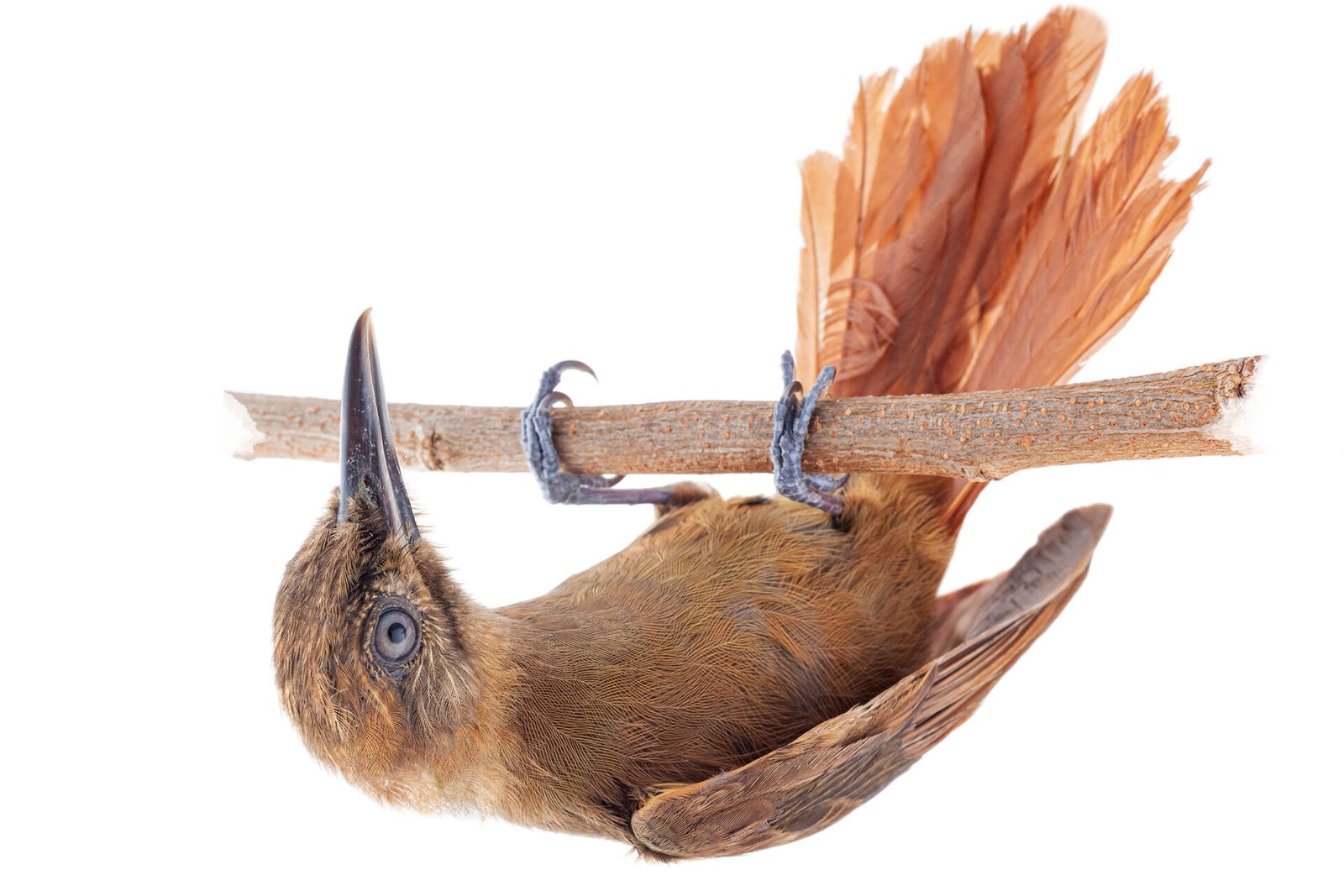
Mamíferos
1. Allen, H. (1890). Description of a new species of bat of the genus Carollia, and remarks on Carollia brevicauda. Proc. US Natl. Mus. 13: 291–298.
2. Aranguren, C. I., González-Carcacía, J. A., Martínez, H. & Nassar, J. M. (2011). Noctilio albiventris (Noctilionidae), a potential seed disperser in disturbed tropical dry forest habitats. Acta Chiropterol. 13: 189–194.
3. Arroyo-Cabrales, J. & Reid, F. (2016). Platyrrhinus helleri. The IUCN Red List of Threatened Species 2016: e.T88159886A88159952.
4. Arroyo-Cabrales, J. (2008b). Genus Vampyressa O. Thomas, 1900. Pp. 346–350. En Gardner, A. L. (Ed). (2008). Mammals of South America. Vol. 1. Marsupials, Xenarthrans, Shrews, and Bats. University of Chicago Press, Chicago, Illinois.
5. Baird, A. B., Hillis, D. M., Patton, J. C. & Bickham, J. W. (2008). Evolutionary history of the genus Rhogeessa (Chiroptera: Vespertilionidae) as revealed by mitochondrial DNA sequences. J. Mammal. 89: 744–754.
6. Baker, R. J. & Clark, C. L. (1987). Uroderma bilobatum. Mammal. Species 279: 1–4.
7. Baker, R. J. & Lopez, G. (1970). Chromosomal variation in bats of the genus Uroderma (Phyllostomatidae). J. Mammal. 51: 786–789.
8. Barclay, R. M. R. (1983). Echolocation calls of emballonurid bats from Panama. J. Comp. Physiol. 151: 515–520.
9. Barquez, R., Perez, S., Miller, B. & Diaz, M. (2015). Chrotopterus auritus. The IUCN Red List of Threatened Species 2015: e.T4811A22042605.
10. Barquez, R., Perez, S., Miller, B. & Diaz, M. (2015). Noctilio leporinus. The IUCN Red List of Threatened Species 2015: e.T14830A22019554.
11. Barquez, R., Perez, S., Miller, B. & Diaz, M. (2015). Phyllostomus discolor. The IUCN Red List of Threatened Species 2015: e.T17216A22136476.
12. Barquez, R., Perez, S., Miller, B. & Diaz, M. (2015). Noctilio albiventris. The IUCN Red List of Threatened Species 2015: e.T14829A22019978
13. Barquez, R., Rodriguez, B., Miller, B. & Diaz, M. (2015). Molossus molossus. The IUCN Red List of Threatened Species 2015: e.T13648A22106602.
14. Behr, O. & von Helversen, O. (2004). Bat serenades—complex courtship songs of the sac-winged bat (Saccopteryx bilineata). Behav. Ecol. Sociobiol. 56: 106–115.
15. Bernard, E. & Fenton, M. B. (2002). Species diversity of bats (Mammalia: Chiroptera) in forest fragments, primary forests, and savannas in central Amazonia, Brazil. Can. J. Zool. 80: 1124–1140.
16. Bernard, E. (2003). Cormura brevirostris. Mammal Species 737: 1–3.
17. Bodmer, R. E. (1989). Ungulate biomass in relation to feeding strategy within Amazonian forest. Oecologia 81: 547-500.
18. Bolívar-Cimé, B., Cuxim-Koyoc, A., MacSwiney, M. C. & Laborde, J. (2013). Ampliación de la distribución geográfica de Lampronycteris brachyotis (Dobson, 1879) en la península de Yucatán. Rev. Mex. Biodivers. 84: 402–405.
19. Bonaccorso F. J. (1979). Foraging and reproductive ecology in a Panamanian bat community. Bulletin of the Florida State Museum, Biological Sciences 24: 359–408
20. Bordignon, M.O. (2006). Diet of the fishing bat Noctilio leporinus (Linnaeus) (Mammalia, Chiroptera) in a mangrove area of southern Brazil. Rev. Bras. Zool. 23: 256–260.
21. Bradbury, J. W. & Vehrencamp, S. L. (1977a). Social organization and foraging in emballonurid bats. III. Mating systems. Behav. Ecol. Sociobiol. 2: 1–17.
22. Bradbury, J. W. & Vehrencamp, S. L. (1977b). Social organization and foraging in emballonurid bats. IV. Parental investment patterns. Behav. Ecol. Sociobiol. 2: 19–29.
23. Brandão, M. V., Rocha, P. A., Mendes, P., Bernardo, P. V. S., Cunha, I. N., Colas-Rosas, P. F., Pedroso, M. A., Aquino, C. C. & Aires, C. C. (2016). New records of Lampronycteris brachyotis in Brazil. Mastozool. Neotrop. 23: 147–155.
24. Brigham, R. M., Broders, H. G., Toth, C. A., Reimer, J. P. & Barclay, R. M. R. (2018). Observations on the roosting and foraging behavior of woolly false vampire bats, Chrotopterus auritus, in Belize. Caribb. Nat. 47: 1–7.
25. Brown, J. H. (1968). Activity patterns of some Neotropical bats. J. Mammal. 49: 754–757.
26. Chase, J., Small, M. Y., Weiss, E. A., Sharma, D. & Sharma, S. (1991). Crepuscular activity of Molossus molossus. J. Mammal. 72: 414–418.
27. Clare, E. L., Adams, A. M., Maya-Simões, A. Z., Eger, J. L., Hebert, P. D. N. & Fenton, M. B. (2013). Diversification and reproductive isolation: cryptic species in the only New World high-duty cycle bat, Pteronotus parnellii. BMC Evol. Biol. 13: 26. 18 pp.
28. Cramer, M. J., Willig, M. R. & Jones, C. (2001). Trachops cirrhosus. Mammal. Species 656: 1–6.
29. Creighton, G. K. & Gardner, A. L. (2008). Genus Marmosa Gray, 1821. En Gardner, A. L. (Ed). (2008). Mammals of South America. Vol. 1. Marsupials, Xenarthrans, Shrews, and Bats. University of Chicago Press, Chicago, Illinois. p 51-61.
30. Davis, W. B. & Carter, D. C. (1978). A review of the round-eared bats of the Tonatia silvicola complex, with descriptions of three new taxa. Occ. Pap. Mus. Texas Tech. Univ. 53: 1–12.
31. Davis, W. B. & Dixon, J. R. (1976). Activity of bats in a small village clearing near Iquitos, Peru. J. Mammal. 57: 747–749.
32. Davis, W. B. (1970). A review of the small fruit bats (Genus Artibeus) of Middle America. Part II. Southwest. Nat. 14: 389–402.
33. Durant, K. A., Hall, R. W., Cisneros, L. M., Hyland, R. M. & Willig, M. R. (2013). Reproductive phenologies of phyllostomid bats in Costa Rica. J. Mammal. 94: 1438–1448.
34. Eger, J. L. (2008). Family Molossidae P. Gervais, 1856. Pp. 399–439. En Gardner, A. L. (Ed). (2008). Mammals of South America. Vol. 1. Marsupials, Xenarthrans, Shrews, and Bats. University of Chicago Press, Chicago, Illinois.
35. Emmons, L. H. & Feer, F. (1990). Neotropical rainforest mammals. A field guide. USA: University of Chicago.
36. Emmons, L. H. & Feer, F. (1990). Neotropical rainforest mammals. A field guide. USA: University of Chicago. 281p.
37. Emmons, L. H. (1990). Neotropical rainforest mammals: A field guide. The University of Chicago Press, Chicago and London.
38. Esbérard, C. E. L., Motta, A. G., Almeida, J. C., Ferreira, L. C. S. & Costa, L. M. (2006). Reproduction of Chrotopterus auritus (Peters) in captivity (Chiroptera, Phyllostomidae). Braz. J. Biol. 66: 955–956.
39. Fabián, M. E. & Marques, R. V. (1989). Contribuição ao conhecimento da biologia reprodutiva de Molossus molossus Pallas, 1766 (Chiroptera, Molossidae). Rev. Bras. Zool. 6: 603–610.
40. Feijó, J. A., Rocha, P. A. & Ferrari, S. F. (2015). How do we identify Micronycteris (Schizonycetris) sanborni Simmons, 1996 (Chiroptera, Phyllostomidae) reliably and where we can find this species in Brazil? Pap. Avulsos Zool. (São Paulo) 55: 269–280.
41. Fenton, M. B., Audet, D., Dunning, D. C., Long, J., Merriman, C. B., Pearl, D., Syme, D. M., Adkins, B., Pedersen, S. & Wohlgenant, T. (1993). Activity patterns and roost selection by Noctilio albiventris (Chiroptera: Noctilionidae) in Costa Rica. J. Mammal. 74: 607–613.
42. Ferreira, W. A. S., Borges, B. N., Rodrigues-Antunes, S., Andrade, F. A. G., Aguiar, G. F. S., Silva-Junior, J. S., Marques-Aguiar, S. A. & Harada, M. L. (2014). Phylogeography of the dark fruit-eating bat Artibeus obscurus in the Brazilian Amazon. J. Hered. 105: 48–59.
43. Fleming, T. H., Hooper, E. T. & Wilson, D. E. (1972). Three central American bat communities: Structure, reproductive cycles, and movement patterns. Ecology 53: 555–569.
44. Fleming, T. H., Hooper, E. T. & Wilson, D. E. (1972). Three central American bat communities: Structure, reproductive cycles, and movement patterns. Ecology 53: 555–569.
45. Fleming, T. H., Hooper, E. T., Wilson, D. E. (1972). Three central American bat communities: structure, reproductive cycles, and movement patterns. Ecology 53: 555–569.
46. Flemming, T. H. (1991). The relationship between body size, diet and habitat use in frugivorous bats genus Carollia (Phyllostomidae). Journal of Mammalogy 72:493-501.
47. Garbino, G. S. T., Aquino, C. C. & Aires, C. C. (2012). First record for the state of Rondônia and revised distribution map of Chiroderma trinitatum Goodwin, 1958 (Mammalia: Chiroptera: Phyllostomidae) in Brazil. Check List 8: 254–257.
48. Gardner, A. (2007). Family Noctilionidae. En Gardner, A. L. (Ed). (2008). Mammals of South America. Vol. 1. Marsupials, Xenarthrans, Shrews, and Bats. University of Chicago Press, Chicago, Illinois.
49. Giannini, N. P. & Kalko, E. K. V. (2004). Trophic structure in a large assemblage of phyllostomid bats in Panama. Oikos 105: 209–220.
50. Gongora, J., Reyna-Hurtado, R., Beck, H., Taber, A., Altrichter, M. & Keuroghlian, A. (2011). Pecari tajacu. The IUCN Red List of Threatened Species 2011: e.T41777A10562361.
51. Goodwin, G. G. (1958a). Three new bats from Trinidad. Am. Mus. Novit. 1877: 1–6.
52. Graham, G. (1988). Interspecific associations among Peruvian bats at diurnal roosts and roost sites. Journal of Mammalogy 69:711-720.
53. Haynes, M. A. & Lee, T. E. (2004). Artibeus obscurus. Mammal. Species 752: 1–5.
54. Herd, R. (1983). Pteronotus parnellii. Mammalian Species, 209:1-5.
55. Hershkovitz, P. (1948). Mammals of northern Colombia, preliminary report No 2: Spiny rats (Echimyidae), with supplemental notes of related forms. Proceedings of the United States National Museum, 97: 125-140.
56. Hood, C. & Gardner, A. L. (2008). Family Emballonuridae Gervais, 1856. Pp. 188–207. En Gardner, A. L. (Ed). (2008). Mammals of South America. Vol. 1. Marsupials, Xenarthrans, Shrews, and Bats. University of Chicago Press, Chicago, Illinois.
57. Hood, C. & Jones, J. K. (1984). Noctilio leporinus. Mammalian Species 216:1-7.
58. Howell, D. J. & Burch, D. (1974). Food habits of some Costa Rican bats. Rev. Biol. Trop. 21: 281–294.
59. Jones, P. L., Hämsch, F., Page, R. A., Kalko, E. K. V. & O’Mara, M. T. (2017). Foraging and roosting behaviour of the fringe-lipped bat, Trachops cirrhosus, on Barro Colorado Island, Panamá. Acta Chiropterol. 19: 337–346.
60. Kwiecinski, G. G. (2006). Phyllostomus discolor. Mammal. Species 801: 1–11.
61. Larsen, R. J., Knapp, M. C., Genoways, H. H., Khan, F. A. A., Larsen, P. A., Wilson, D. E. & Baker, R. J. (2012). Genetic diversity of Neotropical Myotis (Chiroptera: Vespertilionidae) with emphasis on South American species. PLoS ONE 7: e46578. 9 pp.
62. LaVal, R. K. (1973). Systematics of the genus Rhogeessa (Chiroptera: Vespertilionidae). Occ. Pap. Mus. Nat. Hist., Univ. Kansas 19: 1–47.
63. Lee, T. E., Hoofer, S. R. & Van Den Bussche, R. A. (2002). Molecular phylogenetics and taxonomic revision of the genus Tonatia (Chiroptera: Phyllostomidae). J. Mammal. 83: 49–57.
64. Lim, B. K., Pedro, W. A. & Passos, F. C. (2003). Differentiation and species status of the Neotropical yellow-eared bats Vampyressa pusilla and V. thyone (Phyllostomidae) with a molecular phylogeny and review of the genus. Acta Chiropterol. 5: 15–29.
65. Loayza, A. P., Rios, R. S. & Larrea-Alcázar, D. M. (2006). Disponibilidad de recurso y dieta de murciélagos frugívoros en la Estación Biológica Tunquini, Bolivia. Ecol. Bolivia 41: 7–23.
66. Lopez-Gonzalez, C. (1998). Micronycteris minuta. Mammalian Species (Issue 583, p. 1). Oxford University Press (OUP).
67. Marques-Aguiar, S. A. (1994). A systematic review of the large species of Artibeus Leach, 1821 (Mammalia: Chiroptera), with some phylogenetic inferences. Bol. Mus. Paraense Emilio Goeldi, Sér. Zool. 10: 3–83.
68. Marques-Aguiar, S. A. (2008). Genus Artibeus Leach, 1821. Pp. 301–321. En Gardner, A. L. (Ed). (2008). Mammals of South America. Vol. 1. Marsupials, Xenarthrans, Shrews, and Bats. University of Chicago Press, Chicago, Illinois.
69. Marques-Aguiar, S. A. (2008). Genus Artibeus Leach, 1821. Pp. 301–321. En Gardner, A. L. (Ed). (2008). Mammals of South America. Vol. 1. Marsupials, Xenarthrans, Shrews, and Bats. University of Chicago Press, Chicago, Illinois.
70. Medellín, R. A. (1988). Prey of Chrotopterus auritus, with notes on feeding behavior. J. Mammal. 69: 841−844.
71. Medellín, R. A., Wilson, D. E. & Navarro, D. (1985). Micronycteris brachyotis. Mammal. Species 251: 1–4.
72. Miller, B., Reid, F., Arroyo-Cabrales, J., Cuarón, A. D. & de Grammont, P. C. (2015). Trachops cirrhosus. The IUCN Red List of Threatened Species 2015: e.T22029A22042903.
73. Miller, B., Reid, F., Arroyo-Cabrales, J., Cuarón, A. D. & de Grammont, P. C. (2016). Chiroderma trinitatum. The IUCN Red List of Threatened Species 2016: e.T4667A22037580.
74. Moratelli, R., Gardner, A. L., Oliveira, J. A. & Wilson, D. E. (2013). Review of Myotis (Chiroptera, Vespertilionidae) from northern South America, including description of a new species. Am. Mus. Novit. 3780: 1−36.
75. Munin, R. L., Fischer, E. & Gonçalves, F. (2012). Food habits and dietary overlap in a phyllostomid bat assemblage in the Pantanal of Brazil. Acta Chiropterol. 14: 195–204.
76. Musser, G. G. & Carleton, M. D. (2005). Superfamily Muroidea. En Wilson, D. E. & Reeder, D. A. (Eds.). Mammal Species of the World: a geographic and taxonomic reference, pp. 894-1531. The John Hopkins University Press, Baltimore, USA.
77. Ochoa, J., Rivas, B., Gómez-Laverde, M., Woodman, N. & Timm, R. (2016). Neacomys tenuipes. The IUCN Red List of Threatened Species 2016: e.T42649A115199078.
78. OConnell, M. A. (1983). Marmosa robinsoni. Mammalian Species 203: 1-6.
79. Page, R. A. & Jones, P. L. (2016). Overcoming sensory uncertainty: Factors affecting foraging decisions in frog-eating bats. Pp. 285–312. En Bee, M. A. & Miller, C. T. (Eds.). (2016). Psychological Mechanisms in Animal Communication. Springer International Publishing, Cham, Switzerland.
80. Page, R. A. & Ryan, M. J. (2006). Social transmission of novel foraging behavior in bats: Frog calls and their referents. Curr. Biol. 16: 1201–1205.
81. Pape, T., Dechmann, D. K. N. & Vonhof, M. J. (2002). A new species of Sarcofahrtiopsis Hall (Diptera: Sarcophagidae) living in roosts of Spix’s disk-winged bat Thyroptera tricolor Spix (Chiroptera) in Costa Rica. J. Nat. Hist. 36: 991–998.
82. Patton, J. L. and Leite, R. N. (2015). Genus Proechimys J.A. Allen, 1899. In: Patton, J. L., Pardiñas, U. F. J. & D’Elia, G. (Eds.). Mammals of South America: Rodents, pp. 951-988. University of Chicago Press, Chicago.
83. Patton, J. L., Da Silva, M. N. F., & Malcolm, J. R. (2000). Mammals of the Rio Juruá and the evolutionary and ecological diversification of Amazonia. Bulletin of the American Museum of Natural History 244: 1-306.
84. Pérez-Consuegra, S. G., Patton, J. L., Vázquez-Domínguez, E., López, J. E., Barahona, R., Ordóñez-Sayle, E. J. & Nicolle, J. A. (2017). Distributional extensions of Carollia castanea and Micronycteris minuta from Guatemala, Central America. Mammalia 82: 72–77.
85. Polaco, O. J. (1987). First record of Noctilio albiventris (Chiroptera: Noctilionidae) in Mexico. Southwestern Naturalist 32:508-509.
86. Rodríguez-Herrera, B. & Wilson, D. E. (1999). Lista y Distribución de las Especies de Murciélagos en Costa Rica. Occasional Papers in Conservation Biology 5. Conservation International, Arlington, Virginia. 29 pp.
87. Romero, L. E. M., & Mandujano, S. (1995). Hábitos alimentarios del pecarí de collar (Pecari tajacu) en un bosque tropical caducifolio de Jalisco, México. Acta Zoológica Mexicana, (64), 1-20.
88. Rossi, R. V., Voss, R. S. & Lunde, D. P. (2010). A revision of the Didelphid Marsupial Genus Marmosa Part 1. The Species in Tate’s ‘Mexicana’and ‘Mitis’ sections and other closely related forms. Bulletin of the American Museum of Natural History, 2010(334), 1-83.
89. Sampaio, E., Lim, B. & Peters, S. (2016). Artibeus obscurus. The IUCN Red List of Threatened Species 2016: e.T2137A21998064.
90. Sampaio, E., Lim, B. & Peters, S. (2016). Dermanura anderseni. The IUCN Red List of Threatened Species 2016: e.T2122A22000743.
91. Sampaio, E., Lim, B., Peters, S., Miller, B., Cuarón, A. D. & de Grammont, P. C. (2016). Cormura brevirostris. The IUCN Red List of Threatened Species 2016: e.T41527A22006450.
92. Sampaio, E., Lim, B., Peters, S., Miller, B., Cuarón, A. D. & de Grammont, P. C. 2016. Lophostoma brasiliense. The IUCN Red List of Threatened Species 2016: e.T21984A115164165.
93. Simmons, N. B. (2005). Order Chiroptera. Pp. 312–529. En Wilson, D. E. & Reeder, D. M. (Eds.). (2005). Mammal Species of the World: A Taxonomic and Geographic Reference. 3rd edition. The Johns Hopkins University Press, Baltimore, Maryland.
94. Simmons, N. B. (2005). Order Chiroptera: 312-529. En Wilson, D. E. & Reeder, D. M. (Eds.). Mammal Species of the World. The Johns Hopkins University Press, Baltimore, MD, USA.
95. Solari, S. (2015). Micronycteris minuta. The IUCN Red List of Threatened Species 2015: e.T13380A22125019.
96. Solari, S. (2015). Saccopteryx bilineata. The IUCN Red List of Threatened Species 2015: e.T19804A22004716
97. Solari, S. (2016). Pteronotus parnellii. The IUCN Red List of Threatened Species 2016: e.T88017638A22077695.
98. Solari, S. (2018). Lampronycteris brachyotis. The IUCN Red List of Threatened Species 2018: e.T13376A22131330.
99. Solari, S. (2019). Myotis nigricans. The IUCN Red List of Threatened Species 2019: e.T14185A22066939.
100. Solari, S. (2020). Lophostoma occidentalis (amended version of 2016 assessment). The IUCN Red List of Threatened Species 2020: e.T88149174A166525772.
101. Solari, S. (2016). Carollia castanea. The IUCN Red List of Threatened Species 2016: e.T88110411A88110432.
102. Soriano, P. & Tavares, V. (2016). Rhogeessa io. The IUCN Red List of Threatened Species 2016: e.T88151760A22019853.
103. Suárez-Villota, E. Y., Carmignotto, A. P., Brandão, M. V., Percequillo, A. R., & Silva, M. J. D. J. (2018). Systematics of the genus Oecomys (Sigmodontinae: Oryzomyini): molecular phylogenetic, cytogenetic and morphological approaches reveal cryptic species. Zoological Journal of the Linnean Society, 184(1), 182-210.
104. Tavares, V. & Mantilla, H. (2015). Thyroptera tricolor (errata version published in 2016). The IUCN Red List of Threatened Species 2015: e.T21879A97207863.
105. Tavares, V., Muñoz, A. & Arroyo-Cabrales, J. (2015). Vampyressa thyone. The IUCN Red List of Threatened Species 2015: e.T136671A21989318.
106. Tello, J. G. (2003). First Description of a Tent Used by Platyrrhinus helleri (Chiroptera: Phyllostomidae). In Acta Chiropterologica (Vol. 5, Issue 2, p. 269). Museum and Institute of Zoology at the Polish Academy of Sciences.
107. Thies, W. & Kalko, E. K. V. (2004). Phenology of neotropical pepper plants (Piperaceae) and their association with their main dispersers, two short-tailed fruit bats, Carollia perspicillata and C. castanea (Phyllostomidae). Oikos 104: 362–376.
108. Timm, R. M. (1984). Tent construction by Vampyressa in Costa Rica. J. Mammal. 65: 166–167.
109. Tirira, D. G. (2004). Nombres de los mamiferos del Ecuador. Nazca, Quito, Ecuador.
110. Vallejo, A. F., Tirira, D. T. & Carrión-Bonilla, C. (2016). Marmosa isthmica. En Brito, J., Camacho, M. A., Romero, V. Vallejo, A. F. (Eds.). Mamíferos del Ecuador. Version 2018.0. Museo de Zoología, Pontificia Universidad Católica del Ecuador. https://bioweb.bio/faunaweb/mammaliaweb/FichaEspecie/Marmosa%20isthmica
111. Valqui, M. (1995). A small terrestrial rodent community in northern Peru. Thesis Master in Science. University of Florida. 111 pp.
112. Velazco, P. M. & Cadenillas, R. (2011). On the identity of Lophostoma silvicolum occidentalis (Davis & Carter, 1978) (Chiroptera: Phyllostomidae). Zootaxa 2962: 1–20.
113. Velazco, P. M. (2005). Morphological phylogeny of the bat genus Platyrrhinus Saussure, 1860 (Chiroptera: Phyllostomidae) with the description of four new species. Fieldiana Zool., n.s. 105: 1–53.
114. Velazco, P. M., Gregorin, R., Voss, R. S. & Simmons, N. B. (2014). Extraordinary local diversity of disk-winged bats (Thyropteridae: Thyroptera) in northeastern Peru, with the description of a new species and comments on roosting behavior. Am. Mus. Novit. 3795: 1–28.
115. Voss, R. S., Lunde, D. P. and Simmons, N. B. (2001). The Mammals of Paracou, French Guiana: A Neotropical Lowland Rainforest Fauna Part 2. Nonvolant Species. Bulletin of the American Museum of Natural History 263: 1-236.
116. Weksler, M. (2016). Proechimys chrysaeolus. The IUCN Red List of Threatened Species 2016: e.T18278A22209011.
117. Willig, M. R. (1985). Reproductive activity of female bats from northern Brazil. Bat Res. News 26: 17–20.
118. Wilson, D. E. & Findley, J. S. (1977). Thryoptera tricolor. Mammal. Species 71: 1–3.
119. Wilson, D. E., & LaVal, R. K. (1974). Myotis nigricans. In Mammalian Species (Issue 39, p. 1). Oxford University Press (OUP).
120. York, H. A., Foster, P. F., Jones, M. F., Schwarz, W. H., Vezeau, A. L. & Zerwekh, M. S. (2008). Observations of cavity-roosting behavior in Costa Rican Lophostoma brasiliense (Chiroptera: Phyllostomidae). Mammal. Biol. 73: 230–232.
121. Zortéa, M. & Aguiar, L. M. S. (2001). Foraging behaviour of the fishing bat, Noctilio leporinus (Noctilionidae). Chiroptera Neotrop. 7: 140–142.